

By WINTER JOHNSON Special to the Daily Press
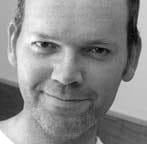
If there is a slender man pushing a baby stroller on the sidewalk, donning a bright yellow cap and fluorescent yellow workman’s vest with “World Walker” emblazoned on his back, he’s not a father walking his child, he is Mark Cundy, world walker for cancer research.
Embarking on the third walk in his tri-continental series, Cundy is currently on his way from Santa Monica to New York, trekking more than 2,300 miles in an effort to raise money for his cause. Utilizing a Polish baby stroller to carry his needed supplies, Cundy has walked from London to Moscow, and Melbourne to Sydney over the last year, leading to his total of 2,300 miles.
From Southend-on-Sea, a small seaside town outside of London, Cundy was an employee of GE in England when cancer touched his life, taking a cousin and uncle from him in 2004. Cundy saved money for four months before he quit his job in September, and began to walk a month later. In order to “warm up” for his mission, Cundy walked from London to Amsterdam in 2003.
A lover of Bruce Springsteen, the British sense of humor and tea, Cundy, 39, has no wife or children, but gives his “mum and dad” a ring once a week as he crosses his planned-out destinations.
The Daily Press recently caught up with Cundy on the Third Street Promenade before his trek.
What prompted you to start walking for cancer research?
“There are two principal reasons behind it. First of all, I wanted to raise money for cancer charities, initially Cancer Research UK back home in England, but I am also supporting the national and regional charities of each country that I walk through. For here, it’s the American Association for Cancer Research and also the Pediatric Cancer Foundation. The charity angle was one of the reasons behind it. The other was that I just wanted an adventure. I guess I had my mid-life crisis early. Also, I’ve lost two family members last year to cancer, my cousin and my uncle, and my best friend lost his brother as well. So unfortunately, it was an easy choice of what charity to support. My cousin died when he was only 29, which is appalling. It’s terrible at any age, but when you get older people, you kind of expect them to slow down a little bit. When someone dies in their twenties, that hits you. He was the only other member of the family in my generation, which is quite significant. My uncle died last year. He was a great guy. That was a big loss. And my best friend’s brother was also about our age.”
Do you have a monetary goal? “Initially I did, but what I had to bear in mind was the level of coverage that I can enjoy. I’ve been on national television in the UK, Germany and in Poland; 11 newspapers in Australia, and four back home. But if you don’t get the coverage, then people don’t know, and then they can’t make donations. So I’d like to raise 50,000 pounds for Cancer Research UK, and as many thousands I can for different charities around the world.”
What career did you have before you started these walks?
“I was head of training and development for the GE Company... I had a really good job, to be honest with you. I had a couple of previous adventures — I worked for the Epcot Center in Florida for a year in the UK pavilion. I also spent a year living in Thailand. I was in Bangkok teaching English, and I always thought there was one last adventure in me. I figured before I get to 40 would be the best time to do it.”
Why walking? “I like grand gestures. I like big things, and things that are significant. When I decided to walk, it was a Geldoff moment. I was at home in England and watching TV, and I saw the advertisement for Cancer Research UK: ‘Can you donate two pounds for cancer research?’ And that was my Geldoff moment. No, I don’t want to donate two pounds, I want to donate loads of money, hundreds of pounds, thousands of pounds. But I thought, ‘What can I do?’ I’m not rich, I’m not famous, I can sing a little bit, but no one is going to pay to hear me. So I said, walk. Let’s walk.’ This is my millennium project, to walk around the world, but because I am funding it myself, I had to snip it to a tri-continental walk.”
What mistakes did you make from previous walks?
“I got the blisters and indigestion, so I learned all the lessons from that. Now I put Vaseline on my feet every morning — that’s the trick. If you walk, if you run, if you jog, put Vaseline on and you’ll get no blisters. Two pairs of socks, two thin pairs of socks, because if you’re just wearing socks then it’s rubbing against you, but if you have two, then it’s sock on sock, and again you don’t get blisters. Also, it’s been Nike shoes all the way, and I wish they would sponsor me, but they’ve said ‘no’ twice. I’ll keep knocking on the door. I’ve also learned not to eat lunch. I just have breakfast around 7:30 or 8 a.m. and then I’ll walk through all day and have dinner at around 6 p.m. I’ll have nothing to eat during the day. I don’t actually get hungry, but I do drink plenty of water.”
What about your living accommodations? Do you stay in a hotel or camp outdoors?
“I stay wherever I can. I don’t have a tent or anything like that. I need to have walls around me when I finish. I’ve joined a few Web sites, and they put up a one-page profile offering travelers a place to stay. I’ve had about 20 places to stay, which is great because I don’t have any big sponsors behind me. No backers, so the day-to-day expenses I’m paying for myself. This is my life savings, going down, down, down. Essentially what happens is that I arrive in the target town that I’ve set aside for the day and then I look for a place to stay. So there’s nothing planned out ahead of time. It’s only been four occasions where I’ve turned up somewhere where there was nowhere to stay — no hotels, motels, guest services, nothing. Two were in Germany and one was in Poland — I don’t speak either language, so that was tricky. What I do in those cases, I would take a taxi to where I’ve just come from or the next town or the nearest hotel, and then early morning I take another taxi to come back again so that I pick up exactly where I left off. The guy that I am staying with in Santa Monica I met online, as well as the person whose home I’m on my way to. I’ve also got another stop in Fontana. Where I’ve got to look for somewhere to stay is in West Covina, and then Ontario.”
Is this your first time in Santa Monica? “It’s my first time on the West Coast, actually. When I worked in Florida, I had a few trips. I went to New York, I saw Washington D.C., I went to Key West, and I went to Mexico, but I’ve never been to the West Coast. I love it here. I arrived on June 23 at about 9 a.m., and I don’t sleep on planes so I was slightly comatose, but I said, ‘I’ve gotta get out, I’ve gotta have a look around.’ I had a walk on the boardwalk, I went down and I saw the beach. It’s a really lovely place — it’s clean, the people are really nice.”
What is your philosophy on life? “I hate clichés but to use a cliché, there is good and bad everywhere, and you can fall into so many traps. If you look for the goodness in people, you will find it. If you go looking for trouble you will find it as well, whether you are out in the field or someone who sits at home and doesn’t do anything. I’ve met people in work and in my travels, and whether they are male, female, black, white, gay, straight, whatever, if somebody is nice to me, they will get it back from me. It somebody isn’t, I will ignore them. I avoid confrontation, I don’t like arguments.”
Describe an experience that made you say, “I am not at home.”
“Well I’ve had quite a few experiences that made me say, “What am I doing? Why the hell am I doing this?’ One of my most interesting evenings was when I was in the Belgian monastery. I was staying with a couple in Antwerp, and they said there was this monastery and they allow travelers to stay there. I went to this monastery, and I don’t have any fervent religion about me, but I’m open and accepting. So I knocked on the door of the monastery, and this guy looks through a hole and says ‘yes?’ I said, ‘Hello, I’m from England!’ So they let me in. The air of piety about this place, it was palpable. I mean no TV, no accouterments of modern living at all. I was wearing these white trainers that squeaked and echoed as I walked through the place. The first thing I did was take those off. But it was such a completely different lifestyle, from getting up at 4 a.m., to the chanting and prayers, that it was almost as if they had been untouched by the decades. It was like stepping back in time. And going through Eastern Europe was quite interesting as well. I mean Russia — I don’t mean to be rude about any one place I have been, but Russia was appalling. I mean desperate. You go to Moscow, which is a nice, bright, clean, modern working capital city. But I had to spend 26 days walking through Russia in order to get to Moscow. For the other towns, the pavement on the streets was a loose collection of concrete slabs, the houses were crumbling, the metal frameworks were jutting out in places where the concrete had tumbled away. You just look at it, and you can see how decades of communism meant that all of the money was sucked into Moscow, and even with the passing of communism, the nouveau riche grabbed all the industries, leaving the masses in poverty. I wasn’t surprised to see people drinking beer at 8:30 in the morning with no job. And you move from different emotions, the first one being, ‘These poor people.’ Each town was horrible. Russia was all brown. And then you What does your family think of your quest? “That Saturday morning when I went home and told them what I was going to do, they were thrilled. They have been and remain concerned for my welfare, but they support me. After the year in Florida and the year in Thailand, they weren’t shocked that I would do something like this. But we keep in touch and I phone them once a week.”
What challenges do you expect to face during your walk across America?
“The heat. The incredible heat. When I was in Poland I walked in the snow. The snow actually comes in sideways in Poland, because the wind is whipping it so much. So there I am with my hood up trying to avoid it. But I’m going to be going through California, through Arizona then through New Mexico and Texas during June, July and August. So what I’ve done is that I’m going to make sure that I’m not doing more than 15 miles a day. I’ve cut it right down to the bone to start with, and then I’m going to step it up as I get to the middle of the country. I’m probably going to be looking at getting up at 4 a.m. most days because I only walk during daylight. So hopefully between 5 a.m. and 10 a.m. I will get to the place I want to get to. If not, I come off the road and find a diner or hotel and hang out for three or four hours and drink lots of cokes, and then after 3 or 4 p.m., carry on from there. Without a doubt, the biggest challenge will be the heat.”
How has this tri-continental walk changed your life?
“Completely. I have never felt such a complete and utter sense of freedom as I have when doing this walk. Freedom tends to be talked about in a collective context, or even a regional, or national context, but individual freedom is not something a lot of people experience during their lives. But I was in Australia, and I had just walked completely through the outback. I looked in front of me, and there was nothing. Not a building in sight. I looked behind me, there was the same, to the side there were trees and flat land. There was not another human being around me, which could be a bit scary. I walked to the next town, grabbed a cup of tea, and went outside at about 10 p.m., looked at the stars that I had never seen so clear and said, ‘This is freedom.’”
When do you plan on finishing these walks? Is there a definitive end?
“I have it all planned out. The end of my walks will be Oct. 29 to Dec. 17, when I walk back to Buckingham Palace.”
What are your future goals? “To write a book about the experience. If the book is published and sells in sufficient numbers, I will have the opportunity to choose what I want to do next. If the book is not successful, I’ll have to go back to GE. Once I finish walking, I am going to have a nice Christmas with the family, and then I’m going to spend two weeks knocking out this book. I write in my journal every day about everything that’s happened. It’s getting pretty thick at the moment. It’s actually going to be an editing job, picking out the highlights. Hopefully people will be interested in it, and then that will give me the opportunity to do more traveling, more writing, and that’s where I hope to go with it. If that doesn’t work out — then I’m fully qualified to do a human resources position in training and development.”
What’s your advice to someone wanting to raise money for a cause?
“Whatever you are planning to do, the first thing to do is see it. See the vision, see where you want to be. Don’t start planning logistically, don’t discuss it with too many other people because they will either freak out or they will tell you why it can’t it be done, or they will tell you so many of their ideas that it ceases to become your own. Spend time in quiet contemplation seeing exactly what it is you want to do, whether it’s a walk, whether you want to build something, write something, just see the end product. Then preparation, preparation. If I just decided one day to get up and start walking I would have failed a long time ago.”
Originally published in the Santa Monica Daily Press print edition on July 4, 2005. Read the original PDF.