

COMMUNITY PROFILES
By PAM WIGHT Special to the Daily Press
It took a Westwood housewife speaking to his 1986 urban-plan-ning class at UCLA to inspire environmental activist Mark Gold to action.
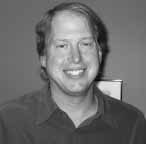
Gold, 41, is the executive director of Heal the Bay (HTB), a local environmental group founded 19 years ago by Dorothy Green, a housewife. Having completed a B.S. and M.S. in biology from UCLA, Gold was working on his doctorate in environmental science and engineering. Green’s speech came at a time when Gold was unsure of how he wanted to apply his knowledge, and she inspired him to the point that when she asked for volunteers to help her, he stepped forward.
“HTB was about a year old at the time; they had no staff and barely 10 cents to rub together,” Gold said. “And here was this woman running it, a housewife, who also happened to be the biggest water activist in the state of California.”
Growing up in Santa Monica spawned a life-long love of the ocean for Gold. He took regular trips to the beach, and family vacation destinations almost always were coastal areas. The beach, for Gold, provided a place of respite.
“Whenever anything went wrong and I wanted to escape, I would go to the beach,” said Gold. “I always felt best near the ocean.”
The UCLA doctoral program required Gold to do his research at the same place he interned. When it came time to do research, he had been volunteering at HTB for two years. Thinking it unrealistic that HTB would be able to pay him for an internship, Gold assumed he would be heading to the Natural Resources Defense Council in San Francisco, a common destination for environmental internships.
But Green reached out to help him. “She told me, ‘If we can’t raise the money for you, I’ll pay for it out of my own pocket,’” Gold said.
He became HTB’s first paid staff member in 1988, and today the nonprofit organization consists of 35 staff members, more than 500 volunteers, a 31-member board of directors and a $3 million budget. It receives funding from federal, state and private grants, as well as dues from its 10,000 members. Before coming to HTB, Gold worked as a consultant, writing environmental impact reports, while earning his doctorate. He decided he was not cut out for that life.
“If I’m not motivated by my work, I’m like a slug,” said Gold. “Most people who know me would not believe it because this place motivates me so much. It’s liberating. I get to wake up each day and work for a cause that everyone in the Los Angeles area cares about. If I was just doing a job just to do a job, I’d be lucky to get out of bed in the morning.”
Despite his love for his chosen work, life for Gold has not been entirely smooth sailing. By 1999, after working untenable hours for years, his health began to suffer. In a three-month period, he underwent two back surgeries and a heart operation called cardiac ablation, where an electric current is shot through the heart to correct arrhythmia. Convinced it was brought on by stress, his wife, Lisette Bauersachs, insisted he slow down and spend more time with their three children.
“I had a very scary experience during that time,” Gold said. “Right after my second back surgery, my baby daughter was born, and I was a couple of weeks away from my heart surgery. I remember looking at this little baby tucked in my arm and thinking, ‘I’ve got to see her grow up.’”
Gold and Bauersachs met while working on their doctorates in the same area. He credits her strength, along with support from his staff, with helping him to keep things in perspective.
On Oct. 1, Gold won the Sustainable City Plan’s Outstanding Individual Award for his efforts at improving the water quality of Santa Monica Bay. As the founder of Santa Monica’s Task Force on the Environment in 1991, Gold was one of the leaders in implementing the Sustainable City Plan 10 years ago.
The Daily Press caught up with Gold at the headquarters of Heal the Bay.
WERE YOUR PARENTS ACTIVE ON ENVI- RONMENTAL ISSUES?
“No, not really. My dad was a probation officer, and my mom was a librarian. But they were both very well read and articulate. They exposed us to everything, like theater, travel, art. They weren’t politically active, but they were opinionated. At dinner-time discussions, everything was fair game. Whether it was politics or news of the day…there were no wall flowers in my family. Both my parents were in jobs where they were trying to do good in people’s lives. I think they instilled that in me.”
At what point did you realize you wanted to focus on the big picture rather than on the pure science of biology?
“My UCLA biology department, during my undergrad years, had some guys who were National Academy of Science members, legends in the biology area. I learned a lot of my critical-thinking skills from those guys. They told me, ‘Don’t just trust it because it’s in print, tear it apart, find out what’s wrong with it.’ They got the big picture. That kind of biologist seemed exciting to me. But they were all retiring. So I saw this next generation of scientist — and I won’t name names — but one of the things that struck me was the narrowness of their knowledge. A couple of professors didn’t know who our senators were. For example, there was one professor who was studying the nervous system and physiology of a particular species of frog, but he knew nothing about the natural history of that frog. I thought there was something wrong with that, it was too myopic. I love the big picture. How can I apply my knowledge to help solve this huge, complex problem?
“Another inspirational moment was when a scientist told us in a speech that we must get out of our ivory tower and weigh in on scientific and environmental issues. He said if we didn’t get involved, some politician with a lot less knowledge would be making decisions without us. So that was a driving force for me.”
How important is local activism vs. State and federal activism to making change?
“You need it all. Santa Monica is so great on the environment that it’s been like a laboratory. Some officials don’t know much about it, but they’re willing to try new things to protect the environment. We’ve been very active also on the state level. We’ve written over 10 laws for the state, including an education proposal that will include environmental education in all California schools, from K-12. Candidly, the federal level is bad.”
HAVE YOU SEEN A DIFFERENCE ACROSS THE ADMINISTRATIONS?
“Yes, huge. Bush senior was actually OK, not great, but in comparison to his son, he was John Muir. I haven’t seen anything close to this bad in my experience. He’s much, much worse than the Reagan administration. It’s by far the worst environmental administration we’ve had since people have been watching the environment. There’s very little enforcement, so there’s no deterrent. They’ve weakened environmental protection by many small rule changes, failed to fund existing regulatory programs, failed to implement regulations on the books, etc. Expectations for the Clinton administration were too high. We were disappointed, but he did a lot on land acquisition.”
What is the most frustrating part of your job in getting the message to the public?
“Poll after poll demonstrates that the environment is a top-shelf issue. Just look state wide at the success at the many environmental propositions that have passed. We even voted to tax ourselves $11 billion to protect the environment. Only on education are we willing to do that. But it doesn’t translate into elected officials doing what needs to be done — that’s frustrating. We’ve been successful in the regulatory arena, but the electoral side has been more difficult.
“We’ve had to become more focused on education. It’s 60 percent of our budget now. Realizing that we cannot achieve our goals until we truly educate all 10 million people in Los Angeles County was mind-numbing.”
DO YOU EVER SEE THE LIGHT AT THE END OF THE TUNNEL?
“It’s hard. But in the ’80s people would point to Santa Monica Bay and say that’s the most polluted body of water around, but now people can point to it as a success story to show what can happen when the community gets focused, gets expertise and really works together to solve a problem.”
IS THE BAY HEALED? DEFINE HEALING.
“When I first came to HTB, I admit I hated the name. It was before they had the cool fishbone logo. It just sounded pseudo-spiritual. But the improvements in the ecology, not just the sediment quality, opened my eyes and made me see why it was a good name. The bay has an ability to heal itself if we just take away the insult, if we leave it alone. I wouldn’t be caught dead talking that way when I was 24. I’m known as cynical, Mr. Half-empty. But I’m actually optimistic about what we’re doing here.”
DO YOU EVER FEEL LIKE QUITTING?
“No, although there are things about running a medium-size business that are not in my area of expertise and are tedious. The business side of it. I don’t have an MBA, so I must learn on the job, and from some of my board members. It does wear you down after a while. But I am fortunate to have a strong wife to make sure my life stays balanced. Because when you work on something so hard that’s your passion, things can go awry, like with my health problems I had. I was just working myself to death.”
WHAT ARE SOME OF THE SUCCESSES OVER THE PAST FIVE YEARS?
“The biggest water quality improvements came from the 1998 and 2002 implementation of sewage treatment plant upgrades. The clean beach initiative has improved water quality in areas like Santa Monica Canyon and a number of beaches along the bay in the summer months. The regional board helped get the Tapia Sewage Treatment Plant to stop discharging into Malibu Creek between April and October, which has improved Surf Rider Beach during the summer.
“Where progress needs to occur is implementation of existing regulations. Prop. O will go a long way toward that. We need regulations on dam releases and when they can release. There’s a lot of projects in the works to improve water quality that will be exciting to see come on line in the next couple of years. That’s the good thing about hanging in there over time, to see something that was a twinkle in someone’s eye become law…but it’s slow going.
WHERE DO YOU SEE YOURSELF IN FIVE YEARS?
“I don’t have any reason to leave this job. The mission’s not done, it’s still exciting. My kids are still in school in Santa Monica, we love our home…things are good. We love the community. There’s no rush to go anywhere. I’m not in a hurry to do anything else. I expect to see myself in the same place, but I’m not close-minded.”
Mark Gold Age: 41 Family: Wife Lisette Bauersachs; son Zack, 11; son Jake, 8; daughter Natalie, 5 Education: BS/MS biology, UCLA; Doctorate, Environmental Science and Engineering, UCLA Hobbies: Going to the beach, playing with his kids, sports — Dodgers, Lakers fan Residence: Santa Monica, Sunset Park area Salary: Declined to state
Originally published in the Santa Monica Daily Press print edition on October 11, 2004. Read the original PDF.