

ANGRY YOUNG ARCHITECT
COLORADO AVE. — Only eight people in the country have won architecture’s equivalent to the Nobel Peace Prize and two of them hail from Santa Monica.
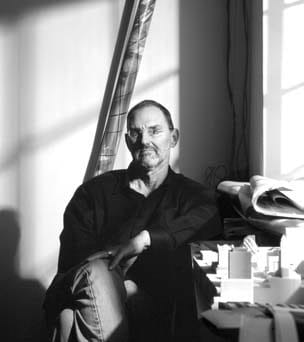
Thom Mayne, a city resident for the past 20 years, on Sunday won the Pritzker Prize, joining another local resident, Frank Gehry, who received the honor in 1989. Mayne, 61, who battled a bad boy image for years before exploding onto the international architecture scene in his mid-50s, is the first American to win the Pritzker in 14 years and only the eighth U.S. architect to capture it in the 27-year history of the contest. In the past few days, Mayne has been busy at his Santa Monica studio answering hundreds of phone calls and e-mails from colleagues, teachers and friends from across the globe that he’s worked with over the past 30 years. He has been interviewed for hundreds of articles in various publications since the prestigious honor was announced four days ago.
“I’m not surprised, it’s the Pritzker,” Mayne said of the response. “(But the prize) did startle me.”
Mayne, who’s been recognized for his projects throughout the world, said he isn’t too impressed with Santa Monica’s city government or its architecture. He only noted Gehry’s Santa Monica home and a few early Neo Spanish-style houses as notable pieces of architecture within the city.
Mayne said this week that City Hall’s lack of vision has created an ugliness that permeates throughout Santa Monica, particularly the building across the street from his studio at 2041 Colorado Ave., which he describes as “ugly,” “total crap” and “nothing of value.”
And as for the rest of the city, Mayne can’t understand Santa Monica’s love affair with the past.
“It’s odd for Santa Monica, whose political aspects are liberal, that they want to be fake and have all of these Victorians, which is not too liberal at all... I mean what’s so good about the 19th Century?” Mayne asked.
Like many developers and architects in Santa Monica, Mayne has run into the same bureaucracies that other residents complain of when dealing with City Hall, particularly its planning department and various boards and commissions.
Several years ago, Mayne was denied by Santa Monica’s Architectural Review Board to build a small house in his Ocean Park neighborhood, and was given the bureaucratic run-around when he won the bid to design and build a new fire station.
“They wouldn’t let us build it, they made it hard for us,” he said. “It was completely arbitrary.
“Every time I’ve done business in this city, it hasn’t gone very well.”
He said Santa Monica has a tremendous opportunity to change its reputation now that City Hall is searching for a new director for its planning department.
“You need somebody that is forward thinking, has a global sense of architecture,” Mayne said, adding the position requires someone who has a strong sense of urban design, particularly with large development projects coming up like the redevelopment of the Civic Center and Santa Monica Place.
“They need a well-respected person in here and it should be easy to find that person,” he said.
Still, Mayne said he loves living in Santa Monica because of its natural diversity, its pure liberalism and “fabulous mixture of people.” He only wishes its architecture was as diverse. He noted that some of the best architects in the world come from Santa Monica.
“You think the city would hold huge bragging rights, but they kick them out or give them grief,” Mayne said of local government. “There is all of this talent in this town and they don’t seem to go to their own talent.”
When asked whether or not he’s ever considered becoming more involved in the local process, Mayne joked: “I work here, I live here, but do I think about the city, get involved in it? Of course not... because of how they treat us.”
When awarding the Pritzker, the jury cited Mayne for creating a bold architectural style that reflects the “unique, somewhat rootless, culture of Southern California” through angular lines and an unfinished, open-ended feel.
“Thom Mayne is a product of the turbulent ’60s who has carried that rebellious attitude and fervent desire for change into his practice, the fruits of which are only now becoming visible,” the jury wrote.
For Mayne, winning the Pritzker is vindication for the years he spent struggling to maintain the purity of his unorthodox ideas. His stand earned him a reputation as an angry young man and alienated many clients.
“My whole essence was attempting to do something I believed in. I didn’t understand how to negotiate that notion of the private and the public world,” he said at Morphosis, his Santa Monica studio. “Your whole life you’re told you’re an outsider and you can’t do that, and then you’re honored for it.”
Mayne will be awarded a $100,000 grant and a bronze medallion on May 31 during a ceremony at the Jay Pritzker Pavilion in Chicago’s Millennium Park.
Past winners of the Pritzker Prize, sponsored by the family that developed the Hyatt Hotel chain, include I.M. Pei, Gehry, Renzo Piano and Rem Koolhaas.
Fired from a teaching job at California State Polytechnic University, Pomona, Mayne founded an alternative architecture school called SCI-Arc in 1972 with six colleagues and 40 students.
That same year, he started Morphosis and two years later won his first award for designing a Pasadena school attended by his son.
For two decades, Mayne worked in relative obscurity on local houses, restaurants and office buildings and a handful of overseas projects. Then, in the mid-1990s, a series of convention-bending designs won Mayne his first major international acclaim.
He has since won competitions and commissions for an array of major public projects, including the new Alaska state capitol building, a new academic building for The Cooper Union in New York, and New York’s 2012 Olympic Village, which will be built even if the city doesn’t get the Games for that year.
Today, Mayne projects little of the rebellious 1960s nature that marked the early days of his turbulent career.
He keeps his salt-and-pepper hair military-short and pads around his sparsely furnished studio in a sport coat and brown wool slacks, cradling a Starbucks coffee and wielding a notepad full of scribbles.
His office, an unassuming building in a quiet neighborhood, is cluttered with spent ideas. Old models gather dust on window ledges, tables and even the bathroom floor below yellowing newspaper clips and articles about urban renewal.
It’s clear that while Mayne has learned to temper his stubborn idealism, it is far from gone.
He talks about buildings as agents of social change, as the vital “connective tissue of the city” that can change how people live and behave. He said that even in his best projects, he has never managed to achieve more than 75 percent of what he initially envisions — in part because of compromise with clients.
“I can’t imagine any serious architect saying he’s not restricted. I’m always restricted, it’s just a matter of degree,” he said. “It’s inevitable.”
Mayne considers Diamond Ranch High School in Pomona, completed in 2000, as the turning point of his career. It was one of his first large-scale U.S. commissions and with it, critics began to laud his idealism instead of bash it.
“It shouldn’t have been built. It was practically impossible, and we proved it wasn’t impossible — that was the fun part,” said Mayne, who won a design contest to build the school. “Everyone said we couldn’t do it and we did.”
The cluster of angular glass-and-metal buildings jut from the campus like spaceships in a design that Mayne said attempts to resolve the tension inherent in modern life in “mathematical, geometric terms.”
“The school was fascinating because I realized that young people have a great appreciation of ideas,” he said. “Children can still look at something and make connections because they aren’t loaded culturally.”
The same sharp, unfinished feeling can be found in other Mayne creations, reflecting his obsession with the tension of living in a diverse, migratory society. Wings protrude at odd angles, lines and forms collide and blend, whole buildings are slanted and off-kilter.
“If there’s a singular broad topic to being a human being today, it’s that you somehow have to manage these radical non-sequiters, these conflicting desires,” he said. “It represents a dialogue that’s attempting to bring those forces together to some singularity, but it denies completion. The building belongs to the site — but it’s also homeless, it’s migratory.” (Associated Press Writer Gillian Flaccus contributed to this article.)
Originally published in the Santa Monica Daily Press print edition on March 24, 2005. Read the original PDF.