

Feinstein answers critics
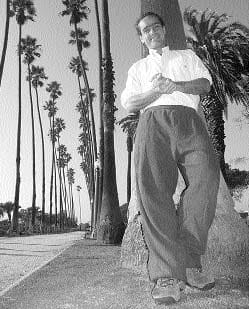
Mike Feinstein has likely been one of Santa Monica’s more colorful mayors, and not just because he’s often seen rollerblading through town in tie-dye pants.
A vegan Green Party activist with a pony tail, 43-year-old Feinstein at times embodies Santa Monica’s persona as a liberal beach town with progressive environmental and social polices.
Tonight Feinstein will most likely return to his role as a councilman when the city council appoints one of its own to serve as mayor for the next two years. The council traditionally rotates the mayor every two years.
And while Feinstein said it has been a privilege to serve as mayor, he also has said he’s looking forward to not having the responsibility of chairing council meetings and dealing with the ceremonial functions that come along with the job.
While the position carries equal power as a council member, some former mayors have abused the role in the past, observers say. Previous mayors have used their powers to prevent colleagues with different ideological views from speaking at council meetings, some say. They have publicly quarreled with council members on the dais, and allowed themselves to dominate discussions and debates.
Feinstein’s colleagues say he has worked to find common ground between council members aligned with Santa Monicans for Renters Rights, a liberal group that has long dominated local politics, and those who represent business interests.
He has said he would rather an ordinance or a motion pass unanimously than a split vote. And the majority of the time his strategy of making compromises has worked. Most of the items the council votes on are passed unanimously.
Council members say Feinstein runs a tight meeting and ensures everyone has a chance to speak before calling a vote. He usually calls on himself to speak last, and rarely interrupts his colleagues.
“I think he has done an excellent job,” said Katz, a political opponent of Feinstein. “He was always considerate and gave everyone a chance to be heard and he never tried to control a debate.
4E7,“If he was up for it, I’d ask him to be mayor again,” he added.
A mayor must remove his or her personal and political views when guiding a meeting, Feinstein said. Without that, the meetings and the deliberations become one-sided.
“The first business of mayor is to ensure meetings are fair,” he said. “I said that in my first speech as mayor and I strive for it every time we’re up there. And the fact that our meetings are so open and friendly is a reflection of that.”
“The first business of mayor is to ensure meetings are fair.” — — MIKE FEINSTEIN Santa Monica Mayor
“I really feel it is important to separate my personal political views from how I chaired meetings,” Feinstein said. “It harms the proceedings if the chair cannot be impartial.”
Councilwoman Pam O’Connor nominated Feinstein to serve as mayor. She said it takes a subtle hand to keep a council meeting in order, and Feinstein has shown he can keep the mood of the meetings light while making sure the council stays on track, she said.
“The challenge as always is that we have serious business up there and we work with the community,” she said. “He kept that in perspective and had a light touch.
“When you are running the meetings you need to know when to keep it on track, and make sure things don’t get out of control or too serious,” added O’Connor, who also has served as mayor.
The mayor has also served as the bull’s eye for critics and detractors who lampoon the council for whatever ills they perceive infect Santa Monica. Many have taken to the microphone to blast the mayor and attack him personally.
But while Feinstein is dragged through the mud by his critics during the meeting, he remains calm and he never interrupts or answers their attacks and diatribes.
“Clearly there are people who act in bad taste and don’t conduct themselves with the dignity of the proceedings or with the community in mind,” Feinstein said. “However, people have died fighting for a nation with our free speech rights, and if we have to suffer the on-going excesses of individuals, that’s a small price to pay.
“Personally, you can’t help but feel hurt by unfactual personal attacks,” he added, “but that’s one of the unpleasant parts about being a public official and the privilege of being one of this community’s decision makers far outweighs any temporary discomfort I may feel.”
From adding fluoride to the city’s drinking water to newly enacted ordinances curbing public feeding to the homeless to the proposed living wage ordinance, Feinstein has been at the forefront of many contentious issues.
He also has guided the process of a $95 million downtown parking redesign project, a $120 million civic center redesign plan, a $50 million new main library proposal, and an ambitious task force that may help redesign downtown.
Feinstein has also faced criticism.
Holbrook and Katz have threatened to sue the city if the council cannot finish its business by 11 p.m. They say by not finishing at a reasonable hour, the council is infringing on the public’s right to participate in the meetings.
Some have argued Feinstein’s insistence on only two council meetings a month has overloaded agendas and dragged a handful of meetings out to 2 a.m.
But Feinstein counters that he has tried to start council meetings earlier but council members refuse because they can’t get off of work early.
“I can’t accept people complaining about the lateness of the hour if they refuse to come in earlier,” he said. “Other cities our size where being an elected official is not a full-time job start their meetings much earlier than we do.”
“I can’t accept people complaining about the lateness of the hour if they refuse to come in earlier. Other cities our size, where being an elected official is not a full-time job, start their meetings much earlier than we do.” — — MIKE FEINSTEIN Santa Monica Mayor
Feinstein said it’s necessary to limit the council to two meetings a month to ensure the public and council members have more time to study the issues.
Business officials accuse Feinstein of ignoring their frustrations over vagrants dominating the Promenade. A petition signed by business owners and managers on the Promenade had been circulating City Hall for months before council members Richard Bloom and O’Connor — who was running for re-election this fall — added the item to a council agenda.
At that meeting, Feinstein criticized the two for playing politics at the expense of the poor. He said the council should’ve waited to address the issue until the city released its annual social services report, which was a month and a half later.
In the end, the council adopted two ordinances that will go into effect Jan. 1 which are aimed at curbing food programs for the homeless in downtown city parks and forbidding people from sleeping in their doorways. Feinstein supported the doorway ordinance.
“I stand by what I said then,” Feinstein said. “We should have waited, it was inappropriate to move ahead like that without all the facts and all the information about what was going on out there.”
Originally published in the Santa Monica Daily Press print edition on December 10, 2002. Read the original PDF.