

Plan should make it cleaner, more swimmable
Anew bill signed by Gov. Gray Davis last week is designed to pump $20 million into cleaning up Santa Monica Bay and diverting the pollution that makes people sick.
The bill, introduced by Assembly-woman Fran Pavley, allows at least $20 million from Proposition 50 to be directed into the Santa Monica Bay Restoration Commission.
Prop. 50 passed last November and will fund billions of dollars for water-related projects throughout California. It allows the state to spend the money first and holds the Legislature responsible for paying back the bonds, said Craig Perkins, the director of environmental and public works at City Hall.
The commission’s restoration plan identified nearly 250 different actions, 74 of which are priorities, that address critical problems such as storm water and urban runoff, pollution, habitat loss and degradation, and public health risks associated with seafood consumption and swimming near storm drain outlets.
“Santa Monica’s environmental policies as a steward of the bay and our Assemblymember Fran Pavley are a perfect fit,” said Santa Monica City Councilman Kevin McKeown. “The recall has spurred a bill-signing frenzy, and with the ink flowing free in Governor Davis’ pen, I’m glad some of that flow is funds for our bay.”
Money can now be funneled into local projects like cleaning up the most polluted beaches in the bay, and properly treating storm water at the city of Santa Monica’s facility at Centinela Avenue and Pico Boulevard, said Mark Golds, president of Heal the Bay, a nonprofit organization dedicated to cleaning up Santa Monica Bay.
The project at Centinela, which is expected to cost more than $1 million, will involve putting trash and debris filters underneath the street so garbage, grit and sediment won’t flow through the storm drain into Ballona Creek, where it currently flows, Perkins said.
At the end of Wilshire Boulevard, city officials plan to install catch basins and screens to filter out debris from the busy street that ends up in the bay during dry weather months.
“We have a goal that no storm water should leave our boundaries into the ocean during the dry weather months,”
Perkins said. “We are trying to prevent runoff from getting to the ocean.”
Santa Monica has five “outfall” storm drains that go straight into the ocean. The city of Santa Monica’s goal is to ensure no debris goes directly into the bay.
“Ultimately, we will have all the drains that are in Santa Monica be either treated or diverted into the sewer,” Perkins said.
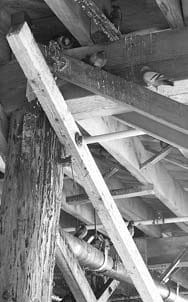
About $80 million will go into the “Clean Beach Initiative,” which includes small projects near the Santa Monica Pier. Money will be spent on retrofitting the pier by placing netting underneath to contain the waste from thousands of pigeons that roost there, Golds said. The project also includes better containment of trash on the pier — like a mechanism that traps the waste originating from fishermen who clean fish there. Instead of it going straight into the Pacific Ocean, it will be put directly into a receptacle and transferred for treatment, Golds said. Trash cans on the pier will be better contained so seagulls can’t dive in and pull out garbage that ultimately ends up in the bay.
Once the massive plan is completed, the bay should get a clean bill of health and the old saying of “Don’t swim near the pipe,” will be a thing of the past.
“It won’t matter if you are swimming near an outlet if there is nothing coming out,” Golds said.
The money also will go to restoring the Malibu watershed, Malibu Lagoon and properly treating storm water pollution in Ballona Creek.
“I applaud the governor for signing AB 866, which will result in funding of specific programs that will make the Santa Monica Bay a cleaner, healthier and more swimmable water body,” Pavley said. “Our local economy is dependent on tourism dollars and we can’t risk beach closures because of polluted coastal waters.”
The bay commission includes local, state and federal agencies, elected officials, environmental groups, businesses, scientists and community residents to develop programs that improve the bay and surrounding watershed. The restoration plan was established in 1988 under the Clean Water Act’s National Estuary Program. It was the first-ever comprehensive management plan to ensure the long-term health of the 266-square-mile bay and its 400-square-mile watershed.
But the plan wasn’t really developed and approved until 1994. However, there wasn’t funding to bring many of the action plans to fruition.
“They’ve done a lot on the research side and cleaning up the beaches,” Golds said. “Now the planning stage is done.”
And the money is now available. “We are at a very critical stage in the restoration of the bay with the authority, resources and plan to improve upon the progress we’ve made over the past 20 years,” said Los Angeles City Councilmember Jack Weiss, who was recently named as the chair of the new bay commission.
Originally published in the Santa Monica Daily Press print edition on October 2, 2003. Read the original PDF.