

Ocean Park’s shops struggle with new city-imposed restrictions
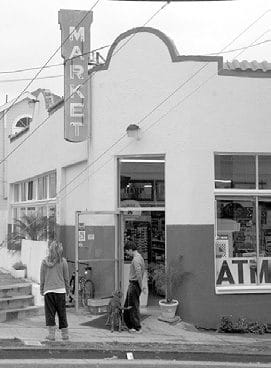
When Ocean Park’s three neighborhood markets were built 80 years ago, there was little concern in City Hall that they would be disruptive to the area.
But today, some officials on the Santa Monica Planning Commission believe the stores should be more regulated.
City Hall is demanding that the shops shape up and adhere to a spectrum of new guidelines and ordinances.
Market owners and workers are fearful that the required changes could put them out of business.
Residents of Ocean Park, who’ve grown attached to the little corner markets, want the stores to stay exactly as they are. They say the shops are the anchors of their neighborhood, which many feel still reflects the laid back lifestyle of Santa Monica’s beach mentality.
“It’s Kafka-esque,” said Dana Cuff, an Ocean Park resident and UCLA professor of architecture and urban design. “We’re going to go through the bureaucracy to end up with something worse than we already have.
784,“If we had a sophisticated system,” she added, “you’d treat them as individual cases and help them survive.”
Victims of the system?
Planning officials have demanded the stores shorten their hours, take down signs and, in one case, do major architectural work to the facade of the market, according to planning department documents.
Nazmul “Hawk” Haque, owner of the Fair Market, located at Fourth Street near Pacific Avenue, has lived in Ocean Park for 16 years and said he doesn’t understand why he has to close his store early. Haque chalked the situation up to bureaucracy.
“That’s their book,” he said. “They go with the book.”
The city has deemed Haque’s store, widely known as “the best little wine shop in Santa Monica,” a liquor store because more than 20 percent of his shelf space is devoted to alcoholic beverages.
Liquor stores are not allowed in residential areas, according to city law. Haque, who has no backroom storage for his extensive wine offerings, has not purchased any new wine for more than a month in order to reduce his stock and meet the city’s requirements.
What’s worse, Haque said, is that the city is making him shorten his hours. For years, the Fair Market has opened at 7 a.m. and closed at midnight. Now, City Hall has set the store’s hours from 9:30 a.m. to 9 p.m.
While residents rue the missed morning coffee and late-night candy bars, Haque said he’s seen a 25 percent drop in revenue.
And he’s not alone.
For years, the Budget Market at the intersection of Fourth Street and Hollister Avenue has stayed open until midnight on weekdays and 1 a.m. on weekends. But if it wants to continue operating, city officials said it’s going to have to conform to a new zoning law, which mandates they close their doors at 9 p.m.
Nadir Ladak, a clerk at the Budget Market, said the reduction in hours could spell the end for the little corner market — and keep him from making his rent payments.
3FD,“I live in Santa Monica,” he said. “How are we going to do it when we have to close four or five hours early?”
The Budget Market is still operating at its old hours for now while owners consider whether to appeal the Planning Commission’s decision to the City Council. Haque is complying because the city is monitoring his store for potential alcohol violations, workers said.
Neighbors fight for markets
Perhaps the most substantial changes the city is demanding pertain to the Marine Market on Seventh Street.
Though it already complies with the city’s hours of operation requirements, the Planning Commission ordered the Marine Market to implement a series of upgrades, including restoring its original windows that were boarded up for structural reasons after the 1994 earthquake.
Neighbors say the cost of the work, which would eliminate two murals on the side of the building, would be extensive and could threaten the livelihood of owners Hong and Young Ahn, known in the neighborhood as “Kim” and “James.”
All three markets also have been told to take down signs, clean up surrounding vegetation, repaint walls, maximize parking and institute a variety of small upgrades.
Dozens of neighbors converged on a meeting of the Planning Commission last month to stand up for their markets.
“It’s not like it’s AM/PM Mini Mart where people are going to come off of Lincoln to find the place,” said Abby Arnold, an Ocean Park resident who ran unsuccessfully last fall for a City Council seat. “‘Neighborhood friendly’ should be determined by the neighborhood.”
“It’s not like it’s AM/PM Mini Mart where people are going to come off of Lincoln to find the place.” — — ABBY ARNOLD Ocean Park resident and former City Council candidate
New times, new measures
Despite appearances, city officials said they are working hard to bring the buildings up to code so they can remain in the community.
The markets have been in violation of the law for years, said Bruce Leach, a city planner. When the buildings were originally constructed in the 1920s, there were no zoning laws. When the codes were put into place in 1948, the markets were given 25 years to change into residential use.
But in the early 1970s, the store owners argued they needed more time to convert and they were granted another 10 years to comply with the laws. Then in the 1980s, residents went to bat for the little markets and they were given conditional use permits that expired in 2000.
The owners’ applications for renewals of those permits had been sitting in City Hall for more than two years until last month, when the Planning Commission met to discuss the future of Ocean Park’s markets.
The issue came up as a matter of housecleaning in the planning department and didn’t stem from resident complaints. The applications for renewal of the permits went before the Planning Commission last month. The applications were approved contingent upon a list of upgrades and restrictions.
Though the markets have been operating outside the law for many years, the city’s building officer, Tim McCormick, said the markets haven’t received any complaints. Enforcement of building code violations is complaint-based, he said.
“Under the current system, we wouldn’t know about it and we wouldn’t deal with it,” he said.
In 1988, a strict new set of zoning ordinances governing neighborhood markets went into effect. Among other things, the ordinances limited the hours of operation of local markets.
The Planning Commission recommended extending the markets’ permits in perpetuity, but only if the stores meet the legal requirements.
The issue is scheduled to go before the City Council this summer.
Darrell Clarke, chair of the Planning Commission, said he doesn’t want to see the markets go under.
“To meet the (legally mandated) requirements, you’d have to tear the places down,” he said. “It’s absurd.”
Clarke doesn’t agree with his colleagues and said many of the recommended restrictions — which passed on a contentious 4-3 vote — are too limiting.
He said he would support an appeal to the City Council on some of the restrictions, including forgiving the window remodel at the Marine Market and relaxing the hour restrictions at the Budget and Fair markets.
“Ocean Park is a very special place,” said Clarke, who lived in the neighborhood for years. “It feels like you’re somewhere else — not in L.A., where you have to get in your car to do everything.”
- Abby Arnold, Ocean Park resident and former City Council candidate
- Darrell Clarke, chair, planning commission


Originally published in the Santa Monica Daily Press print edition on May 3, 2003. Read the original PDF.