

Parking violators get hit with criminal and civil charges
Police confiscated more than a dozen handicap permits in the past week from people who were illegally using them to park for free.
The Santa Monica Police Department conducted an undercover sting operation two days in the past week at the Santa Monica College Campus to catch individuals who are not disabled but used parking permits to either park in designated spaces or park for free.
Last Tuesday, 50 percent of the people stopped by police officers after they exited their cars were using someone else’s handicap placard, which is hung from the rearview mirror. On Tuesday of this week, seven people were caught — two who parked in designated spaces in the SMC parking garage and five that parked on streets near the campus.
Handicapped individuals who have parking permits are able to park for free in the city — including preferential parking zones, metered spots and just about anywhere on the street, except red zones.
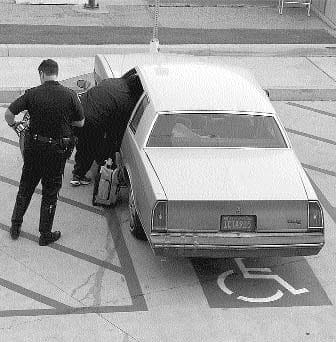
Two undercover officers stationed themselves in an unmarked car directly across from a row of handicap spaces in SMC’s parking structure on Tuesday morning. Within 15 minutes, officers already had cited a violator.
When the undercover officers saw people exit their vehicles who didn’t appear to be disabled they radioed Adam Gwartz, a motor officer assigned to special enforcement who was waiting on the upper level of the parking structure.
Gwartz approached the individuals, asked them to produce identification and compared it to the information on the handicapped placard. If they didn’t match up, Gwartz cited them with a misdemeanor charge and $330 ticket. The placards also were confiscated and will be turned over to the Department of Motor Vehicles, which will determine if another one should be re-issued. A letter will be sent to the individual whose name is on the placard informing them the placard was confiscated.
“We have to make sure (handicap) spots are left open for people who need them.” — — LT. FRANK FABREGA SMPD spokesman
Individuals who can’t produce identification to officers will be arrested.
“If they show no outward signs of disability we approach them because it gives us probable cause,” said SMPD Sgt. Greg Smiley of the traffic services enforcement division.
Traffic safety officers, who predominately issue parking tickets, also were on hand to observe how to write a misdemeanor citation and file a crime report so when they see a handicap placard violation, they can cite the individual on the spot instead of having to call police officers.
Many people who were cited were using a family member’s placard. On Tuesday morning, a woman who was caught said she was using her mother’s permit and didn’t know it was illegal until she was stopped by police. It’s probable she won’t forget now because she got hit with both criminal and civil charges.
Last week, six out of 13 people stopped by officers were cited for parking on streets near the SMC campus, which are mostly restricted for residents in the area.
This was the first handicap placard sting the SMPD has conducted.
“The reason we do this type of action is because the (chief of police) wants to ensure people with disabilities in this city know we are committed to making sure people don’t abuse their rights for parking,” said SMPD Lt. Frank Fabrega. “We have to make sure those spots are left open for people who need them.”
Officers chose the SMC campus because there have been a lot of complaints from residents in the area, police said. Other problem areas reportedly are in city parking structures and beach lots.
“One of the things we hope that comes from this is that people have seen or heard of the enforcement and won’t do it,” Fabrega said.
Originally published in the Santa Monica Daily Press print edition on January 29, 2003. Read the original PDF.