

Neighbors to be included in property discussions
The city’s largest homeless services provider may soon be moving to a new address.
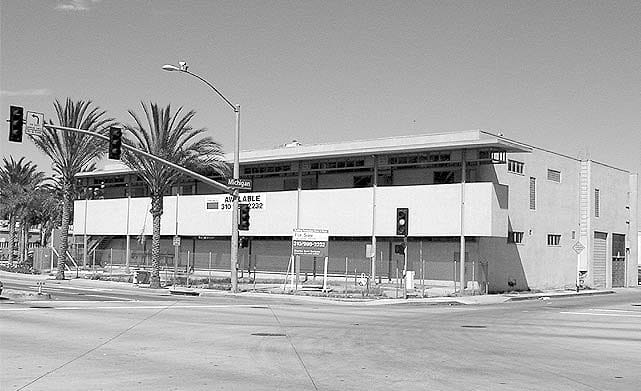
Ocean Park Community Center, a private, non-profit agency with a $7 million annual budget, is in escrow to buy a two-story building located on the northeast corner of the intersection at Cloverfield Boulevard and Michigan Avenue.
The new building will cost OPCC $5 million to purchase and another estimated $4 million to upgrade. To help fund the move, OPCC officials plan to ask the Santa Monica City Council for a $7 million loan on Aug. 12.
At least one neighbor of the proposed center wasn’t pleased with OPCC’s plans.
“I’m speechless,” said Korey Tataryan, who owns Bon Voyage, an auto body shop immediately adjacent to the building. “Are they going to control (the homeless)? I don’t think so. They wish they could control them.
“We’re going to have to move out when they move in if the homeless start (defecating) and (urinating) all over my front yard at night — which they will.”
“We’re going to have to move out when they move in if the homeless start (defecating) and (urinating) all over my front yard at night — which they will.” — — KOREY TATARYAN Owner, Bon Voyage auto shop
Tataryan, who has worked out of his shop for 15 years, will have an opportunity to discuss his concerns with OPCC officials.
With escrow scheduled to close in 98 days, OPCC officials announced Friday they will conduct an intensive public outreach campaign, when they will meet with area businesses and residents.
An effort to relocate OPCC three years ago to 820 Broadway was shot down by residential neighbors who opposed the new center. But Tataryan said neighborhood objections probably won’t stop this effort because the new center is located on an intersection with three gas stations in an industrial area.
Currently, OPCC pays the city $4,100 monthly to lease 8,500 square feet from the building used by the Big Blue Bus at 612 Colorado Ave. But the bus operation is expanding and OPCC needs a new home.
As the first step in OPCC’s outreach campaign, officials on Friday held a press conference.
“We know that neighbors don’t want our clients lining up on the streets,” said John Maceri, OPCC’s executive director, who added that a full-time staffer will patrol the center’s grounds. “We’re not trying to hide anything. We’re completely transparent.”
“We know that neighbors don’t want our clients lining up on the streets. We’re not trying to hide anything. We’re completely transparent.” — — JOHN MACERI OPCC’s executive director
Maceri said the new center will be an improvement over the existing operation, offering beds for 55 homeless or mentally ill people each night, plus daytime services for as many as 250 people. The new building contains than 20,000-square-feet of outdoor space for parking, as well as a seating and recreation area.
But before any of the details are set in stone, officials want to be sure that the community has been included in the process.
“We know that this type of project is a real sensitive use,” said Julie Rusk, manager of the city’s social services department.
Rusk said OPCC officials plan to make the exterior of the building more attractive through extensive landscaping, lighting, tearing out the chainlink fence and erecting some sort of screened fence or barrier to separate the outdoor area from motorists.
If the escrow does move forward as officials expect, the next step will be to obtain the proper permits from City Hall, a process that is expected to take one year.
After that, an extensive remodel will commence. Maceri said the building will undergo $4 million in upgrades, including completely redoing the building’s plumbing, sewer connections and electrical system, as well as installing kitchens, sleeping and dining areas, lounges, showers and bathrooms.
Rusk said the new center will only serve about 30 more clients than the existing center, but will improve the quality of service clients receive. She emphasized OPCC’s approach of giving consistent and ongoing care to help transition people from the streets, into jobs and long-term housing arrangements.
More than 97 percent of OPCC clients stay in permanent housing once they are placed, said Maceri, who added that there is still a great deal of work to be done.
“We’re not operating under any fantasy that this is going to solve homelessness in Santa Monica,” he said. “But we’re happy it’s going to provide more beds (for people in need).”
Originally published in the Santa Monica Daily Press print edition on July 14, 2003. Read the original PDF.