

DOWNTOWN Whenever it comes time for Max Sterling to describe the West Coast lifestyle to friends and families out of state, he immediately refers to Palisades Park — the epitome of beautiful beach-side living.
“It’s one thing to show people what it’s like to live here,” said Sterling, who makes it a point to visit the park once a month to enjoy its sprawling views of the Pacific Ocean.
Thanks to the Landmarks Commission, Sterling will be able to enjoy that same view for the next 33 years and beyond.
The commission voted unanimously on Monday to designate the 26.4-acre park along Ocean Avenue as a historic landmark, preserving and honoring the largest parcel of green space in Santa Monica.
The park was found to be eligible for landmark status, meeting five of the six criteria used to determine if something is eligible, including the park identifying with historic personages and exemplifying the city’s cultural and architectural history.
Originally known as Linda Vista Park, the plot of land was donated in 1892 by city founders Sen. John P. Jones and Col. Robert Baker on the condition that it be used as a park in perpetuity. The park is bordered by the Santa Monica Pier and Ocean Avenue with a break at the California Incline.
“The respect for the beauty of the spot has continued ever since then,” said commission Chairman Nina Fresco.
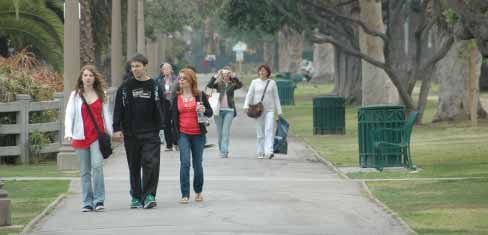
Along with the pier sign, Palisades Park has long been an iconic figure in Santa Monica, frequently shot in television and movies. Because of its views of the Pacific Ocean, the park is a hot spot for tourists, a favorite workout location for exercise buffs and a home for the homeless.
Sterling grew up in Venice and frequently visited the park in his youth.
“It’s hard for me to imagine anything different,” said Sterling who was visiting the park on Tuesday afternoon with his friend Andrews, who moved to Los Angeles about six months ago, visited Palisades Park within the first two weeks.
“It’s beautiful,” she said. “I’m all for preserving green space.”
The park is a living museum of sorts with monuments and other historic markers scattered throughout the 1.5 mile-long park, including the Veterans Memorial and St. Monica statue.
The commission’s most recent act of designation is unique from the more than 60 structures that have been designated since the process first began in 1975. Unlike the so-called landmarked buildings such as the Old Town Hall on Second Street or the Miles Playhouse on Lincoln Boulevard, Palisades Park is a living historic monument, sensitive in that it constantly changes as its landscaping grows.
To address these changes, a plan will be drafted to allow regular maintenance of the trees and shrubbery without filing for a Certificate of Appropriateness application, a city permit required for modifications to landmarked structures.
“What we need to do is enable the park’s department and the tree people and all the people that do good work in the park to continue to do the good work and not get tied up in regulations,” Fresco said.
A draft of the maintenance plan will be available to the Landmarks Commission and Recreation and Parks Commission for review within 185 days of the designation. The Recreation and Parks Commission voted last month to support the landmark designation.
“We recognize not only its recreational value, but it’s iconic and historic value,” said Susan Cloke, the chairman of the RPC.
A landmark nomination application was filed for Palisades Park in October 2006. The commission was scheduled to vote on the designation in June but postponed action after several concerns were raised by city staff about the short time frame to draft a maintenance plan, which was originally set for within 95 days of the designation.


Originally published in the Santa Monica Daily Press print edition on September 12, 2007. Read the original PDF.