

Levy: City Hall enforcement has ‘gone amuck’
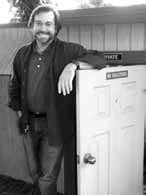
SUNSET PARK — David Levy knows all too well what the phrase “you can’t fight City Hall” means.
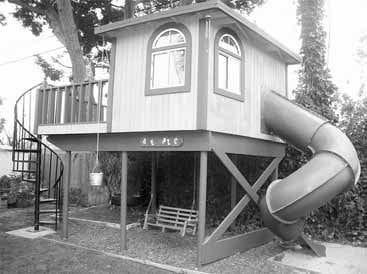
Levy recently lost his battle with City Hall, four years after staff there ordered him to tear down his son’s playhouse in the backyard of his Sunset Park home, despite that he was first told it was legal.
Levy sued City Hall and lost at the Supreme Court level earlier this year. He then was informed in a letter from the City Attorney’s Office six weeks ago that he would be responsible for paying its fees — $85,000 worth.
But Levy hasn’t had to pay one cent. In the past month, an outpouring of financial support has drifted in by sympathetic citizens, who have covered the entire legal bill.
“I thought the city would have enough integrity not to go after me,” Levy said. “But I’m just stunned by the generosity of the citizens of Santa Monica.”
David and Beth Levy sued City Hall in September 2000 after building inspectors backed out of their decision that the playhouse was a legal one-story structure. The reversal came after the Levys’ backyard neighbor, Tundai Garai, complained to then-mayor Ken Genser. Levy’s lawyer, Chris Harding, argued that Genser influenced city staff’s decision.
Genser has said all along that he only asked staff through two e-mails to check on the legality of the playhouse and never directed staffers to take a position on it, which is what the lawsuit alleged. Genser has said in the past that the lawsuit has been a waste of taxpayers’ money and politically motivated by Harding, who has sued City Hall several times in past years.
The 2nd Appellate District Court ruled in January that Genser didn’t advocate that the playhouse be deemed illegal, but that he just asked about it. The appeals court ruled that Genser is protected under the First Amendment to respond to constituents’ complaints. The Levys appealed the decision, and the Supreme Court refused to hear the case in March.
“We knew our chances were slim... I was very disappointed in the outcome, and I was also surprised,” Levy said. “I thought we’d be heard in court.”
After City Hall deemed it legal and Levy, a psychiatrist, spent $11,000 to have it meet specifications as well as appease Garai, the playhouse was in jeopardy of being torn down. Levy was told by city staff that the 12 1/2-foot-tall playhouse was two stories and, therefore, illegal.
“Their ultimatum was either tear it down, relocate it from the wall 30 feet or face criminal charges,” Levy said. “So I picked option No. 4, I sued them.”
It wasn’t until after he filed the lawsuit that City Hall eventually deemed the structure legal and the playhouse was treated as a “non-conforming use,” under which the city might change its mind again if someone complained, the Levys argued. The Levys moved forward with the suit, saying the process was unfair and illegal.
“Before we sued they said they would take it up in closed session and would let us know (whether the playhouse was legal),” Levy said. “It wasn’t acceptable to me that they would control the quality of their own actions behind closed doors... an entire policy was overturned without me being heard.”
It wasn’t until the Levys sued that City Hall decided to make the structure legal again, according to Levy.
The appellate court’s decision reversed West Los Angeles Superior Court Judge Cesar Sarimento’s decision to deny the city’s motion to dismiss the case in March 2002. The appellate court upheld the city’s anti-SLAPP motion, which is based on a law that prevents people from being punished for exercising their First Amendment rights. It also is designed to protect them when they complain to government officials.
“The city clearly didn’t want this heard,” Levy said. “The city said this (lawsuit) should have never happened, I agree. I have never sued anyone, and I have never been sued. A circus is not what I wanted.”
Levy’s experience with city government, which he describes as “elitest,” has made him much more politically active. Before the playhouse saga, Levy didn’t pay much attention to local politics.
But when he learned earlier this year that Bobby Shriver, brother-in-law to Gov. Arnold Schwarzenegger, had a similar experience with City Hall over the height of his hedges, Levy realized he wasn’t the only one with a bone to pick with his elected leaders. Throughout the legal dispute, Levy was approached by business owners and residents who told him their own nightmare stories with City Hall. But when Shriver’s story was made public after he decided to run for City Council, Levy realized he wasn’t alone.
“At least I didn’t feel like I was picked on and I was the only guy,” Levy said. “This isn’t about hedges, I agree, and this isn’t about the playhouse... It’s emblematic of enforcement gone amuck.”
Levy added that public opinion polls indicate Santa Monicans want their elected leaders to focus on quality of life issues, such as traffic, parking and a growing homeless population.
“There are bigger issues,” he said. “I don’t see playhouse enforcement on the top of the list, or hedge enforcement.”
Asked why he thought City Hall zeroed in on him and his son’s playhouse, Levy offered a psychiatric evaluation of the current administration.
“This isn’t about money, it is hubris and power,” he said. “When you give people power, they will exude it, and it’s hubris because it was the inability to see another person’s view.”
Levy joked that for that analysis, he should probably bill City Hall for his time as a psychiatrist: Amount due — $85,000.
Originally published in the Santa Monica Daily Press print edition on October 4, 2004. Read the original PDF.