

Cameras result in less accidents, officials say
A watchful eye may soon guard over some of Santa Monica’s most dangerous intersections.
Officials hope cameras will catch those trying to “beat the light,” which is said to cause the most traffic accidents in Los Angeles County.
The Santa Monica Police Department is recommending the City Council tonight approve a red light camera system, similar to those found in many surrounding westside communities, that would initially cost taxpayers $4.2 million.
But city officials believe they can more than recoup the costs of installing the system from the resulting citations. City officials are estimating that over five years, the red light system will result in $57,300 more than it will cost to operate and install.
Under a five-year agreement, Redflex Traffic Systems would lease the equipment and maintain cameras at the city’s six most troubled intersections — but only SMPD officers would decide which incidents deserve a citation.
Those caught running a red light on film would receive a $250 fine, two points added to their driver’s license — which typically results in higher insurance costs — and attend traffic school. A picture of the driver running the light would be sent in the mail, along with the citation.
Photos would be collected daily from the cameras by Redflex and sent to SMPD’s computer database where its traffic enforcement officers would pour over the pictures and decide which incidences are legitimate cases of motorists trying to get out of the intersection and those when someone ran a red light.
“We would make all the decisions about whether the citation is enforceable,” said SMPD Capt. Jacqueline Seabrooks. “We would make all of the enforcement decisions; that would not be done by the vendor.”
The cameras have been widely criticized as being “money-makers” for the cities that use them as well as invading the privacy of bystanders.
However, many officials whose municipalities use the red light cameras disagree. They say the cameras change the way motorists act and result in fewer traffic accidents.
“Overall there has been a dramatic decrease (in collisions),” said Joyce Rooney, a transportation engineer for the City of West Hollywood. “It changes people’s behaviors. We started with six intersections and now we have eight, and at all of them we have witnessed a decrease in accidents.”
Rooney said the red light cameras resulted in such a high reduction of people running lights that it took West Hollywood longer than officials predicted to break even on paying for its system with citations.
64C,“Its hard to make it pay for itself,” she said. “Because of the high cost of the equipment and maintenance... it took us almost a year longer than we thought to break even.”
Seabrooks said the red light system is not meant to be a money-making proposition for the city.
“This is about traffic safety,” she said. “No more, no less.”
Officials also dismiss claims of “Big Brother” invading residents’ privacy because the cameras are only activated when a vehicle crosses a sensor in an intersection with a red traffic light.
“People are worried about the technology because they think it’s a foot in the door for something more which could be problematic,” said Lt. Dean Williams, who runs Culver City’s red light camera program. “But you do not have the right to violate the law and photos are only taken of violations; not of on-going activity at the intersection.”
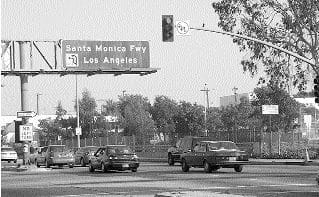
The SMPD has created a list of 20 of the city’s most accident-prone intersections where they propose the city begin installing the cameras. Though the list has not been released, Seabrooks said many of the intersections are on Lincoln Boulevard, near the freeway, as well as on Wilshire Boulevard and Colorado Boulevard.
“We’ve done a lot of homework,” Seabrooks said. “It’s been two years since council gave us the initial approval to look into a red light system.”
Originally published in the Santa Monica Daily Press print edition on August 13, 2002. Read the original PDF.