

Santa Monica Airport considers new safety measures
SM AIRPORT — A collapsible form of concrete that prevented the private jet of New York Yankees third baseman Alex Rodriguez from rolling off a Burbank runway last week may be installed here to protect nearby residents from runway overruns.
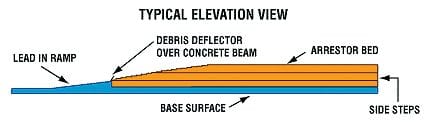
Bob Trimborn, acting manager of the Santa Monica Airport, said he is involved in direct talks with officials from the Federal Aviation Administration about EMAS, or Engineered Materials Arresting System — a stretch of pavement injected with air bubbles designed to collapse under the weight of a wayward aircraft as large as a Boeing 737 traveling as fast as 50 knots.
Also under consideration for the airport is the creation of safety areas at the ends of runways to provide pilots with additional space to slow down their planes if they overrun, undershoot or veer off the side of a runway.
“We are looking at all options right now,” said Trimborn. “We haven’t really fallen on one specific concept, but we are moving fairly rapid towards one.”
The potential costs of the safety projects have yet to be calculated, as they are often specific to a given airport,based on size and layout.
At most commercial airports, the standard runway safety area is 500 feet wide and extends 1,000 feet beyond each end of the runway, according to the FAA. However, since many airports were built before the 1000-foot extension guideline was adopted some 20 years ago, many airports, including Santa Monica, cannot achieve the full standard.
Such obstacles typically include bodies of water, highways, railroads or a severe drop-off in terrain. In Santa Monica’s case, there are homes located directly adjacent to the runway.
Residents said they have been pushing for years to have runway safety areas installed at the airport, but claim the FAA has been reluctant, as new standards and limited runway space would limit the types of aircraft that could fly into Santa Monica Airport. If the full length of the runways were to be truncated, many planes would be forced to land elsewhere.
“The FAA wants the city to install EMAS, and we have some problems with that,” said Cathy Larson, chair of the airport committee for the neighborhood group Friends of Sunset Park. “To install it could take years, and we’ve already waited long enough. Also, it would cost a lot of money — $12 million, according to some estimates — and we don’t think that burden should fall on the shoulders of the city and the residents.”
Larson said since bigger aircraft would be the only ones affected by the creation of runway safety areas, they should be the ones to pay for the EMAS system.
“It only takes one mistake for something tragic to occur,” Larson said.
On April 5, U.S. Congress members Henry Waxman and Jane Harman sent a letter urging the FAA administrator to install runway safety areas at both the eastern and western ends of the airport. That letter was sent in response to a Jan. 20 letter in which the FAA acknowledged the need for safety enhancements at the airport, but only proposed changes at the western side of the runway.
Since that time, the FAA has agreed that both ends of the runway need to be considered, said Ian Gregor, a spokesman for the FAA.
“We are very interested in increasing safety at the Santa Monica Airport, however we are also interested in keeping it available to all class of planes that can safely use it,” Gregor said.
A standard EMAS installation extends 600 feet from the end of the runway. An EMAS arrestor bed can still be installed to help slow or stop an aircraft that overruns a runway, even if less than 600 feet of land is available.
To date, there have been four incidents where the technology has worked successfully, according to the FAA. Three occurred at John F. Kennedy International Airport in New York City. The fourth involved Rodriguez at the Bob Hope Airport in Burbank.
The next steps in the process include meetings among city officials and the FAA, the manufacturer of EMAS and general aviation aircraft, and pilots to compare performance data on the various types of aircraft that use the airport.
“We have been dealing with (safety) issues for quite some time,” Trimborn said. “We are getting close, but I don’t want to raise expectations. We are looking and the FAA has acknowledged a need.”
Originally published in the Santa Monica Daily Press print edition on October 18, 2006. Read the original PDF.