

Program serves as model for other school districts
MCKINLEY ELEMENTARY Rodney Taylor could-n’t believe the sight before him, sitting amongst a sea of children, swarming around a lunch bar, each one carefully assembling a salad on top of their plate, some choosing cucumbers, others opting for the ruby-red beets.
It was the summer of 1997 and the first day of a pilot program that tested a novel idea in the culinary world of schools, incorporating salads using ingredients fresh from the local Farmers’
Market into the daily lunch at McKinley Elementary School.
Taylor, then the director of food and nutritional services at the Santa Monica-Malibu Unified School District, was a skeptic of the program but decided to participate in the lunch on the first day, surprised to see the level of interest by students, each methodically choosing the ingredients of their salad.
Ten years and thousands of salads later, the Farm to School Program is credited with revolutionizing the school lunch, its Farmers’ Market-purchased fresh salads duplicated in district programs across the country.
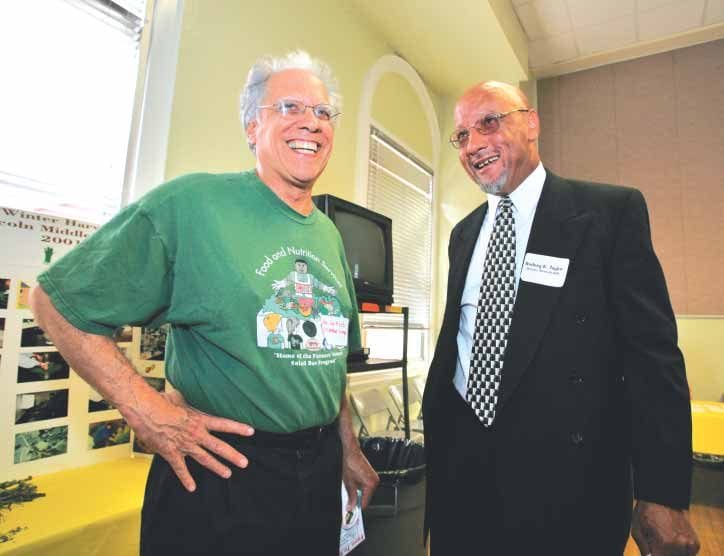
On Thursday, the district celebrated the 10th anniversary of the program at the place where it all started, an event that brought out the key players in the program’s formulation and the staff that have brought it to the level of success experienced today.
The idea was spawned by then school parent Robert Gottlieb whose children attended McKinley and often complained about the quality of the produce at the school.
“They felt the salad in the program was not fresh,” Gottlieb said.
Gottlieb at the time was working at the Pollution Prevention Center at UCLA where researchers were looking to introduce programs at schools where students would have access to salads using ingredients purchased from the local Farmers’ Market.
But Taylor was unsure about the program, feeling that students would likely ignore the salad bar and opt for the hot food menu items instead.
“Being in Santa Monica and Malibu for 9.5 years, what I learned was that the affluent aren’t accustomed to being told no,” Taylor joked, referring to why he decided to test the program.
Taylor has since moved to the Riverside Unified School District where he serves in a similar capacity. He has introduced the farmers’ market program at the district.
“Bob was ahead of his time,” Taylor said.
The program expanded to all the schools in the district within the first four years. Today, nearly 1,000 salads are served every day in the school district. The ingredients are purchased every Wednesday and Saturday at the Downtown Farmers’ Market.
“There is a real interest in buying local,” Dona Richwine, the nutritional specialist for the district, said.“This is a true Farm to School Program.”
The district is credited with being the first in the country to launch such a program and has been a model for other districts across the country and the world. Richwine said she often receives calls from schools in Japan and Sweden.
“It is so exciting as a nutritional specialist,” she said. “It is thrilling to go to a salad bar and see kids pile the vegetables on their plate.”
About one-third of the meals served in the school district come from the salad bar, about half on some days, according to Orlando Griego, the director of food services.
“At first the kids were so-so about the meals, now it has the highest participation after pizza,” Griego said.
Laura Avery, the director of the Farmers’ Market, said that with the talk about obesity and making sure children eat well, it is incumbent on school districts to make sure children have the ability to eat nutritional foods like fresh salads.
“The only way to get it on the diet for the kids is to put it on the plate at school and make the choice accessible to them, not to make it optional,”Avery said. “Once they’re able to taste it, then they’ll decide on their own to continue eating it.”


Originally published in the Santa Monica Daily Press print edition on May 9, 2008. Read the original PDF.