

Main Street developers dig the California coast
MAIN STREET — One of the largest and most controversial developments in Santa Monica history has been sold to a national development company, which plans to build two complexes on the north end of Main Street early next year.
Denver-based Archstone-Smith, which owns, develops, acquires and operates apartment buildings throughout the country, bought the property and all of its approvals in October, according to company spokesperson Heather Campbell. Archstone-Smith plans to break ground on the property, which used to occupy the Pioneer Boul-angerie Bakery, within weeks.
Developer Howard Jacobs, who spent nearly four years getting approval from City Hall for the project, put the property up for sale in November of 2002 for $27 million. Campbell declined to disclose how much Archstone-Smith paid for the property.
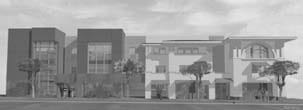
Along with the price tag comes all of the approvals and conditions given by the Santa Monica City Council to build the 170,000-square-foot, four-story, 133-unit housing and retail development, which will be built on opposite sides of Main Street. Both buildings will have underground parking garages.
“They are in plan check right now,” said Paul Foley, a senior planner in City Hall. “We don’t really care who the owners are... a change in ownership is not going to affect the project and they are proceeding just as Howard would have.”
Foley added that Archstone- Smith representatives met with City Hall officials in October to go over the plans and make sure all approvals were in order.
“They met with us to make sure all of the entitlements are there, which they are,” he said. “They are very close to getting their shoring and excavation permits.”
The development site occupies the entire block bounded between Neilson Way and Main Street, and Bay Street and Bicknell Avenue, as well as another parcel across the street. The larger site, which will encompass 107 apartments, is on the west side of Main Street and is where the bakery used to be.
STAKES ITS CLAIM Archstone-Smith, which also owns the 229-unit apartment building at 425 Broadway, considers the Santa Monica market and its surrounding areas as strong investments. The company is nearly finished building a 350-unit garden-style apartment complex in Playa Vista and is revamping an existing 624-unit apartment building in Marina Del Rey. The starting rent for a studio apartment at 425 Broadway is $1,500 a month. Archstone-Smith bought the Broadway property, formerly known as Citrus Suites, from Jacobs in April of 2003.
“Southern California is one of our core markets,” Campbell said, adding it constitutes 16 percent of its market share throughout the country. The region has limited land to build upon, limited competition and the beach areas are communities in which its residents want to live, work and shop in.
“In Santa Monica, it epitomizes that investment criteria,” Campbell said, adding the strength of the Los Angeles market is very attractive to Archstone- Smith and the company is looking for more properties to buy in the area. “We love Southern California.”
So far this year, Archstone-Smith has $661 million worth of development under construction and another $765 million in acquisitions throughout the country. About $263 million of that is development in LA, Ventura and Carlsbad, Campbell said. The company owns at least 13 properties in LA and dozens of others throughout the state. It has offices in Irvine and Northern California.
Although the company’s primary focus has been on apartments, it has begun developing mixed-use projects that have commercial space on the ground floor and housing on top, like the Main Street property. Campbell also pointed to Archstone- Smith’s recent development in Pasadena, which also is a mixed-use project.
“We are moving into the urban villages,” she said.
With a total market capitalization of approximately $11.7 billion, Archstone- Smith owns and operates a portfolio of high-rise and garden apartment communities concentrated in neighborhoods in the greater Washington, D.C. metropolitan area, Southern California, the San Francisco Bay area, Chicago, Boston, Southeast Florida, Seattle and the greater New York City metropolitan area. Its largest market share is in the D.C. area, which constitutes about 40 percent, Campbell said. As of Sept. 30, 2004, Archstone-Smith owned or had an ownership position in 240 communities, representing 83,355 units, including those currently under construction.
DEVELOPMENT RIGHTS CUED UP However, because of the economic downturn in recent years, Archstone- Smith has focused more on acquisitions, like the Main Street property, which is essentially a “turn key” project.
Jacobs, who used to own the property on the north end of Main Street, had transferred the land to his former company, 2000 Main Street LLC. Jacobs also is affiliated with Calstar Equities, Inc., which was the seller of the property to Archstone-Smith.
The property has been vacant for years. Many city officials and residents consider the area a blight on the neighborhood — the vacant Pioneer Boulangerie was home to vagrants, and attracted litter and graffi-ti. It was demolished earlier this year to make way for the new development, which will include neighborhood-serving stores on the street level and upstairs, and luxury apartments for rent.
Jacobs’ investment not only includes millions of dollars in plan preparations and the price of the property itself, but also hundreds of hours spent in the public review process. The project has gone through at least four major revamps since Jacobs first purchased the property. Nearly every aspect of the property was put under scrutiny — everything from the height and width of the buildings’ elevators to how the potted plants on the top floor will be watered, to the color of paint and kind of materials that will be used for the exterior.
Jacobs’ permit application to develop a mixed use project on the site was deemed complete in April 2000 and the draft environmental impact report was completed in August 2000, according to city officials. The Planning Commission denied the project in December 2001. The Santa Monica City Council reversed the Planning Commission’s decision and approved the project in February 2002.
Earlier this year, Jacobs settled his lawsuit against City Hall after claiming the planning department spent too long preparing a crucial document that reviews impacts to the neighborhood. Jacobs claimed the delays cost him millions of dollars because City Hall dragged its feet in completing the environmental impact review of the project. The report was completed several months after the supposed deadline.
The City Council this past May agreed to settle with Jacobs for $125,000, despite that a Santa Monica Superior Court judge ruled last year that City Hall was not to blame for the delays. Jacobs filed suit in 2001 and was asking for $2.5 million. The case was on appeal.
Originally published in the Santa Monica Daily Press print edition on December 2, 2004. Read the original PDF.