

Council also pushes feds to shore up runway safety
SM AIRPORT After five years of negotiations, federal aviation officials are finally ready to meet with the City Council to discuss publicly what they think is the best way to improve runway safety at the Santa Monica Airport.
While the presentation isn’t expected until August, there are already signs that the council will not be pleased with the Federal Aviation Administration.
That’s because the FAA has repeatedly recommended safety enhancements that are well below what city staff has presented in the past, and what the council and residents have demanded.
Anything less would not adequately protect the public if a plane were to overrun the runway, residents living less than 200 feet from the airport said, pointing to a plane in Santa Barbara that traveled 800 feet beyond an airport there after failing to take off earlier this month.
“I think you need to support the recommendations we have made to ensure the sustainability of the life of the people who live around the airport, both whether you kill us slowly with the air (pollution) or rapidly with a crash,” said Sunset Park resident Lorraine Sanchez.
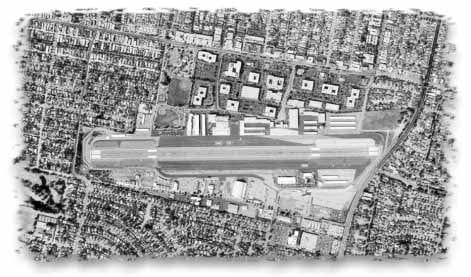
The FAA proposes to replace 160 feet of the roughly 5,000-foot runway with collapsible concrete that is designed to slow down an aircraft without injuring passengers, said Bob Trimborn, acting airport director for City Hall, who has been involved in talks with the FAA.
In addition to the Engineered Materials Arresting System (EMAS), the FAA is also proposing a 25-foot runway safety area on each end of the runway, for a total of 310 feet of concrete that could no longer be used for arrivals or departures.
Residents said they have been pushing for years to have runway safety areas of at least 600 feet installed at the airport, but the FAA has resisted. Doing so would limit the types of aircraft that could fly into Santa Monica. If these aircraft would no longer be able to use the full length of the runway, they would be forced to fly somewhere else, putting more strain on LAX and other airports in the region, officials with the FAA said.
Since security was enhanced at airports following 9/11, the use of smaller, general aviation airports like Santa Monica have become more attractive for business travelers. Also, new forms of ownership have made corporate aircraft financially accessible to a larger number of companies and individuals.
While advancements in technology have allowed jet aircraft to use the airport, the margin for error is slim, prompting city staff to examine the issue in 2002.
At most commercial airports, the standard runway safety area is 500 feet wide and extends 1,000 feet beyond each end of the runway, according to the FAA.
However, since many airports were built before the 1000-foot extension was adopted some 20 years ago, several, including Santa Monica, cannot achieve the full standard. This is due to obstacles such as bodies of water, highways, railroads or a severe drop-off in terrain.
In Santa Monica’s case, there are homes located directly adjacent to the runway.
COUNCIL BRACES TO TAKE OFF City Hall and the FAA have been at odds for years over operations at the airport, with federal officials resorting to legal action to prevent City Hall from enacting an airport management plan that called for the elimination of larger aircraft. That led to a settlement agreement that is good until 2015, at which time many residents and city officials hope they will be able to gain more control over flights.
Until then, the council must play ball with the FAA, hence the meeting in August. If the FAA doesn’t propose something different than what is currently being mentioned, it could mean another round of negotiations, something which nobody seems to want.
Residents are getting more upset by the day and the council’s frustrations with the FAA are clear.
“At some point, we have to say to the FAA that we have been trying to work with you … but if we can’t work something out soon, then maybe it’s time for us to move on independently of the FAA,”said Councilman Ken Genser, council liaison to the Airport Commission. “I’m hopeful we will have an understanding after that August meeting.”
City Attorney Martin Tachiki said the council could lobby for new legislation granting them more control over airport operations or go to court.
“It’s a hard question to answer,”Tachiki said. “It all hedges on what (the FAA) propose(s).”
Airport Commissioner Mark Young said the council could find itself in a tough spot come August. Members may be compelled to accept an offer that is less than what they want so that, at least, they can get some kind of protection for residents. No one seems to want to have the negotiations drag on any longer.
“I believe I speak for the commission when I say our willingness to compromise is pretty much over and we need to act quickly,” said Young, chair of the commission.
“This has been dragging on for years, and during that time, the possibility of something happening at the airport hasn’t diminished.”
Originally published in the Santa Monica Daily Press print edition on June 28, 2007. Read the original PDF.