

Car dealership lots a city conundrum
By CORTNEY FIELDING Special to the Daily Press
After decades of juggling the interests of Santa Monica’s automobile dealerships with those of area residents, City Hall is gearing up to loosen long-time restrictions on car dealers at the risk of overlooking ongoing resident complaints.
City officials have devised new standards that will grant the city’s 18 dealerships the ability to stretch out — allowing them to build parking garages on residential lots for both inventory and customer parking, while also per-mitting the expansion of their existing buildings and showrooms.
The proposed provisions, which could reach the City Council this fall, are designed to ensure an industry — which brings in more than $6 million in sales tax revenue for City Hall each year — stays put in Santa Monica.
However, by pleasing dealers who have felt the weight of a restrictive zoning policy for decades, nearby residents are likely to have a mixed reaction to the standards, said city associate planner Liz Bar-El. While the new provisions could ease parking shortages in certain neighborhoods, some will not be happy with the increased presence of the expanded dealerships.
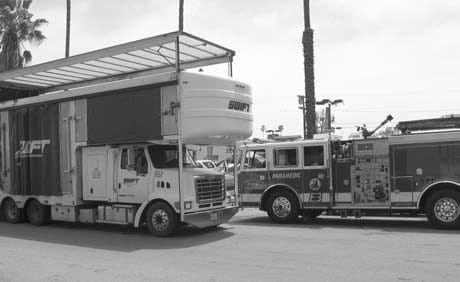
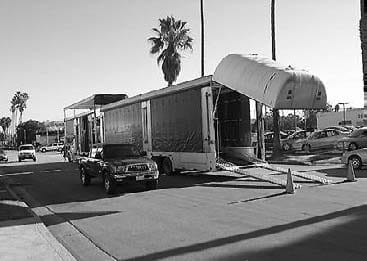
Moreover, while focusing on dealer grievances, the new provisions don’t address what has become the most common complaint among residents — the loading and unloading of inventory trucks on residential streets. City Hall currently allows dealership trucks to sit idle on side streets with engines running while cars are loaded and unloaded.
The practice is legal during normal business hours, but some residents claim to have seen unloading taking place as late as 2 a.m., waking them up in the process.
The majority of complaints that City Hall has received about car dealerships over the years have been about street inventory loading, said City Hall spokeswoman Judy Rambeau.
Rob Wynne, who has lived across from Honda of Santa Monica for years, said he routinely calls City Hall about an issue he says is not just inconvenient, but also dangerous. He said cars must swerve to avoid the trucks, which are oftentimes parked in the middle of the road.
“What’s it going to take before the city stops this?” he asked. “It’s going to take some little kid getting run over.”
Wynne said for the past year he has complained to City Hall about the dealership’s unloading of vehicles during all times of the day and night on 19th Street, between and Arizona Avenue and Santa Monica Boulevard.
The response he has gotten has been form letters, thanking “him for his interest,” Wynne said.
The trucks park in the middle of the road, oftentimes blocking traffic in both directions, and sometimes blocking fire trucks from entering and exiting a nearby fire station, Wynne added.
However, Santa Monica Fire Department Chief Jim Hone said the trucks haven’t caused a problem thus far.
“This is the first I’m hearing about it, and I’m sure if it was an issue it would have been brought to my attention,” he said.
Bar-El said trucks are allowed to unload on side streets between 8 a.m. and 5 p.m. directly in front of the dealerships, as long as they aren’t blocking driveways. She admitted that dealerships often violate the law by parking in the central lane of the street.
“The City Council knows it’s illegal,” Wynne said. “It’s unethical and the selective enforcement of this is criminal. They should be ashamed of themselves.”
Honda of Santa Monica representatives weren’t available for comment.
Planning Commissioner Darrell Clarke, who worked on the new dealership standards, agreed that the practice could be a public safety issue, but said it didn’t come up in commission discussions with city staff. The emphasis was placed on relieving dealer concerns and trying to ease parking conditions, he said.
Wynne claims City Hall ignores resident concerns because of the economic power dealerships hold in the city. Dealerships were the top generator of sales tax in 2004, bringing in nearly $2 million in the fourth quarter alone, records show.
But City Hall has exercised strict supervision over dealers for years, and is not known to have given concessions to the industry in the past.
Originally published in the Santa Monica Daily Press print edition on June 21, 2005. Read the original PDF.