

Kennedy stumps for environmental causes, cousin
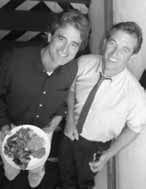
PICO BLVD. — Robert F. Kennedy Jr. was in Santa Monica Monday stumping for his cousin’s City Council bid, which has gained national attention in recent weeks.
But Kennedy’s focus wasn’t just about how well his close cousin, Bobby Shriver, will be able to serve Santa Monica if he wins a City Council seat on Nov. 2. Kennedy’s five-minute speech at Lare’s Mexican restaurant on Pico Boulevard also was about the environment, something Kennedy has spent his career defending.
Kennedy, son of Robert F. Kennedy, told a small group of local environmentalists and politicos that his family grew up on the precept that future generations will judge how well the previous one did. Shriver, 50, who is vying for one of four open Santa Monica City Council seats, is a man who will work tirelessly to improve the community he has lived in for 17 years, Kennedy said.
“Bobby Shriver may be the smartest man I know, but more than just intelligence, he has a lot of wisdom,” he said. “Bobby has enduring values, he’s someone who always keeps his word. I think Santa Monica is so lucky to have someone who is so absolutely trustworthy.”
While introducing his cousin, Shriver said his campaign polling suggests that the second most important issue facing Santa Monicans is the environment, particularly stormwater pollution that runs directly into the Santa Monica Bay. The No. 1 issue to Santa Monicans is homelessness, Shriver said.
Those who attended the lunch included local officials from the National Resource Defense Council; the Baykeeper; actor and staunch environmentalist Ed Begley Jr., as well as Shriver’s local supporters, including Santa Monica College trustees; Harry Keiley, president of the local teachers’ union; and longtime community member Delores Press, who co-founded Santa Monicans For Renters’ Rights, the city’s ruling political party.
Kennedy said environmental issues need to be addressed on the local level, which Shriver — a board member of the California Parks and Recreation Commission — understands. Kennedy added that Santa Monica exists because of its environment — the Pacific Ocean serves as the city’s backdrop.
“Are we going to preserve that for the long term or take short-term benefits for economic prosperity and participate in wasteful behavior?” he asked, adding it’s up to the local communities to take responsibility.
“All politics is local, and that is more true than ever,” he said. “At the state level, a lot of the initiatives are disappearing because of budgetary issues. The onerous and the burden is falling on communities.”
He pointed to Proposition O, which asks voters in Los Angeles to approve a multi-million dollar bond to clean up stormwater runoff. More than 10,000 tons of trash — everything from cigarette butts to syringes — washes up on beaches each year, resulting in beach closures, according to Prop. O literature.
Kennedy has been described as one of the country’s most prominent environmental attorneys. He is the president of the Waterkeeper Alliance and senior attorney for the National Resource Defense Council, which has headquarters in downtown Santa Monica. He has fought for the environment, and everyone’s right to clean water and air by taking on big corporate polluters and holding them accountable for their actions.
Kennedy said the issues are not about preserving flowers and birds, but about creating a livable community for future generations.
“It’s not about esoteric battles, we protect the environment because it enriches us,” he said. “We have a choice of living like miners or conquistadors, taking the resources and leaving, or do we put down roots and build communities that are sustainable?”
Kennedy, who lives in New York, was in Los Angeles working on the John Kerry campaign, as well as to promote his new book, “Crimes Against Nature,” which decries the Bush Administration’s track record on the environment and is on the New York Times Best Seller List. Kennedy writes that George Bush and his administration have eviscerated the laws that have protected the nation’s air, water, public lands, and wildlife for the past 30 years, enriching the president’s political contributors while lowering the quality of life for the rest of the American public.
Shriver, who is just a few months apart in age from his cousin, spent much of his childhood years with Kennedy, often times outdoors near the family compound in Hyannisport, Mass. Kennedy stressed how the environment and the outdoors played a significant role in his family life and is an important value for the next generation.
“We need to create a community our children will be proud of,” he said. “We will be able to look them in the eye and say ‘I left you something better than I received.’”
Originally published in the Santa Monica Daily Press print edition on September 28, 2004. Read the original PDF.