

COMMUNITY PROFILES
By LESLIE ANNE JONES Special to the Daily Press
Everyone has to eat and Rosemary Regalbuto makes sure hundreds of homebound Santa Monicans do everyday.
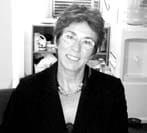
Regalbuto, 57, is the executive director of Meals on Wheels West, a non-profit program that provides nutritious meals for people who are homebound and can’t cook for themselves.
Meals on Wheels West serves about 650 different clients in a year. The majority of clients are the elderly, but the organization provides food for anyone who either can’t cook for themselves or can’t leave their home. About 300 volunteers deliver meals to homes in Santa Monica, Malibu, Topanga and Pacific Palisades.
Meals on Wheels West has been in the community for 31 years and for the past 15 years, the program has been wait-list free. Over half of the Meals on Wheels programs nationwide have waiting lists but in Santa Monica all those who need receive.
The Meal on Wheels Association of America (MOWAA) this month is touting its “March for Meals” campaign to raise awareness of the elderly who go hungry, which Regalbuto has been busy promoting.
595, Born in England to German and Austrian parents, Regalbuto spent her childhood hopping between countries where her father sought employment. She received her undergraduate degree in business administration from New York College and later received her master’s degree in industrial psychology from the New School of Social Research.
In New York, Regalbuto met and married her husband, television actor and director, Joe Regalbuto who has worked on numerous shows such as “Murphy Brown,” “Smart Guy,” and “Friends.” Regalbuto has three grown children, two who work in the film industry, and one still in school.
Before her job at Meals on Wheels, Regalbuto worked in urban education, and held a position at the New York College of Optometry, where she was in charge of eye screenings at schools and nursing homes.
Regalbuto keeps herself busy organizing, fundraising, and meeting with people to discuss the program and advocate for the homebound.
“I’ve gotten a lot more out than I’ve given,” she said. “It feels really, really good, I love coming to work.”
This is Regalbuto’s third year as vice-president of MOWAA. She was president of the California Statewide Association of Nutrition Directors for the elderly and next year she will be secretary of the Santa Monica Rotary Club. Regalbuto recently caught up with the Daily Press at her offices at Sixth Street and Arizona Avenue to talk about her work in the community.
How long have you been doing this?
“I’ve been doing this for 18 years... It’s been a challenge, you know, because you always have to do everything — PR, marketing — I find myself wearing a lot of hats because we’re a small part-time agency... But it’s been very rewarding for me. It’s something I plan on doing forever. You’ll have to cart me on out of here.”
How did you land the job?
“... I probably was lucky. I had my children going to a Unitarian Sunday School because I wanted them to get a concept of all different religions and make their minds up. There was an ad in the Sunday school newspaper, looking for a director of Meals on Wheels.”
What drew you to the program?
“… I’d been here three days, I started on a Wednesday, and on Monday I said, ‘OK, I sort of got a sense of what’s going on, now I want to go out on a route and see what that’s like.’ And we went to a person’s house... So the person didn’t respond, so then we said, ‘Meals on Wheels,’ and we heard a faint noise coming from the bath and the client had taken a bath on Saturday and been unable to get out of the bathtub. So she drained the water and she was there waiting until Monday, when we delivered the meals, that sort of sold me.”
That must have a life-altering experience for you.
“I really realized the importance of Meals on Wheels, and how much it means to those we deliver to. I mean, the meals are very important, everybody needs to eat well... And more than that it was the social contact, and you know, letting someone know that we care about them. We remember their birthdays, we share the holidays with them. It’s very important because it’s a very depressing time of year — holidays and birthdays — for clients. But to me, that social contact is really the most important thing.”
Is there anything in particular that draws you to the geriatric population?
“We’re definitely overlooked in this community. The homebound are not seen, they’re not heard from, they don’t like to make waves, they’re afraid they’re going to be kicked out of their home. I mean it’s a population that isn’t really thought of a lot, and because they’re not, I believe that we need to be there to advocate for them and to assist. If we’re the only ones aware of their plight, and aware of what their needs are, in going to their homes everyday, then it’s our responsibility to do whatever we can, and the community has been wonderful.”
What types of people volunteer?
“The average volunteer is retired, although we do have a lot of younger people now... It’s really interesting, we keep our volunteers and I think that’s because the impact that they’re making on another person’s life — you can see it, they’re on the front line, so to speak. They deliver that meal, that person is just sitting there in their chair, with their little tray table, in front of the television, and that volunteer may be the only person they see that day, or maybe even that week … That contact with the outside world is so important, and that’s one of the things that I love about Meals on Wheels, that they provide that... The Daily Press is delivered to our office here every morning and we send them out with our regular deliveries … A volunteer on Wednesday brings flowers to their client, they’ll bake cookies. They form attachments, they keep in touch with our clients. And our volunteers stay with us. We have volunteers here who have been volunteering for over 25 years. I mean, it’s amazing.”
What’s the time commitment to be a volunteer?
“Two hours, once a week, at a minimum. Some people like to do more, but that’s really all we ask, and that’s why we keep our volunteers, because the time commitment is so small and the reward is so tremendous.”
Describe your day-to-day duties.
“The assistant director and I will take care of everything regarding the program. The PR, the marketing, the fundraising, thank-you letters, speaker bureaus. We’ll entertain requests from people that need to have a speaker to find more out about what we do. So far, today, I went to three meetings, and I’ve got another one, so it’s sort of an endless process. We’re involved in a lot of different things in the community. I’m a commissioner emeritus on the commission for the senior community that used to be called the Commission on Older Americans and again, I see that in our role as being advocates for the homebound.”
Do you cater to specific meal requests?
“There’s no point in bringing someone broccoli if they don’t like broccoli. They wont eat it. So it’s really important that we acknowledge that they have these special likes and dislikes and also special dietary requirements. Diabetic, low-fat, low-cholesterol, vitamin K diets, I mean there’s a wide range. And we have a number of different food providers who enable us to meet those requirements.
Who provides the food?
“We have a number of different food providers. We contract with a company for our frozen meals that we might deliver. During the week we have a frozen meal program for those who are a little more active. We have a hot and cold meal program where we’ll deliver two meals a day and we’ll purchase those meals from St. Vincent’s Hospital. We get some meals donated by the Loews Santa Monica Beach Hotel; Pepperdine University does our Malibu route. At different times we’ve had other hotels and skilled nursing facilities, Santa Monica home health care involved in meals. Ocean House senior retirement community donates meals. We’ve had Casa Del Mar and the Double Tree hotel.
“Hotels are a good resource for us, especially the ones that have five-star status. They have to maintain a restaurant in order to keep that five-star status. And they’re already preparing meals in a restaurant, and I think that there’s a lot of waste for them, too. We don’t give our clients left-overs by any means, but for them to incorporate 10 clients and prepare two meals a day for those clients, seems to be something they’ve been able to do. We have gotten that support for a good number of years.”
Is there a menu?
“Yes, the menu is on a six-week cycle. There are substitutions that are made for a special diet or for certain likes or dislikes, within the menu and then that rotates, and changes — we don’t serve the same food all the time … You can imagine you wouldn’t want to eat the same thing over and over again. And we have a number of different services. We deliver liquid nutrition, that we’ll deliver in the form of Ensure or Ensure Plus, we deliver that by the case. We have our daily meal delivery, which is a hot meal for lunch and a cold meal for supper, and we have our weekend frozen meals, which are precooked meals that are then frozen and just need to be reheated by the instructions on the package. Because we’re not open on the weekends to do the delivery, we do our weekend deliveries on Thursday and Friday along with our regular delivery.
“And there are people in the past that have gone through dumpsters, that are starving for food, or have eaten cat food, you know, for fear of how much money do they have. And it’s sad, it’s sad that in a community such as ours.”
Does it surprise people that you have clients in Malibu?
“Meals on Wheels is all over the world and it’s not an issue of how much money you have. It’s not a function of that. If you are homebound, if you’re unable to get out, if you’re unable to shop and cook for yourself, what are you going to do? I mean, sure they can call restaurants, they can do take-out, but trust me you are not going to get two nutritiously balanced meals. And it’s really important that the meals be balanced because if someone isn’t eating well, in a healthy manner, other things will start happening. The body breaks down — it really needs to be maintained, you need to eat balanced meals. So it really has nothing to do with how much money you have.”
Do clients pay for their meals?
“I think that those who can afford to do it, do it. One big thing... It’s not charity. There are a lot of older people who say, ‘I don’t want Meals on Wheels, it’s charity.’ I keep telling them, we’re there to make things a little bit easier for you. I have no problem with you contributing to your meals, in fact I think a lot of people feel better about it. They like to contribute whenever they can. Our fee, that we would love to get, is $5 a day, for the two meals that we deliver. Everyone cannot afford the $5 per day, and no one is ever turned away because of inability to pay.”
As a celebrity, has your husband been able to endorse the program?
“Yeah, and he’s done a number of things for us — celebrity related things, or a show that he’d be working on that would bring us visibility, and that definitely helps … So I’ve gotten him to do a bit, but working with celebrities is just a pain … He was on Murphy Brown and we had the cast of Murphy Brown at Loews Hotel. We’ve done celebrity golf events, we’ve done restaurant openings.”
Has your husband delivered meals?
“It was interesting, in the Enquirer they printed a bunch of stories about my husband, Joe, and Candace Bergen delivering meals for us, on a Saturday. Now the interesting thing was, they didn’t do it, we don’t deliver on Saturdays, but the Enquirer had it, so it must be true!”
Where does most of your funding come from?
“It comes from all over, some money from the city of Santa Monica, some from the city of Malibu, fundraisers that we participate in. We’re gearing up now for our golf event where we’re partnering with the Mercedes dealership and the Santa Monica Chamber of Commerce in the annual city golf championship, so that’s an event we have coming up in August. We participate in the American Wine and Food Festival, which benefits several Meals on Wheels programs in September. I do a lot of grant writing, and whatever fundraising events I can think of in order to raise funds and increase awareness of Meals on Wheels.”
Who is the average client?
“We serve all ages. We have a client as young as 30 and as old as 102. The majority of our clients are seniors, but we’re not restricted to seniors. We have a huge population of 85-plus, the majority are women and living alone. We may have a couple where both the husband and wife are on the program, or there’s a mother and a child perhaps, both of whom may be on the program.”
What is the most pressing issue that your program is dealing with right now?
“For us, one of the biggest problems is rising gas prices. Gasoline is so expensive, our volunteers are using their own cars and they’re paying for their gas themselves … Gas is very expensive and people are noticing it now. And that’s a problem nationwide, in fact in all Meals on Wheels programs.”
What’s your favorite thing about your job?
“Love to talk. Love to be a spokesperson for meals on wheels.”
What’s your least favorite thing about your job?
“We lose clients, they pass away. We form attachments, you know as long as we’re there for them, and make it as comfortable as we can for them, you know they really are so grateful and they share so many things with us. You know, they’re lonely and they call up and they want to chat for a little bit. You know what? That’s what we’re there for.”
How would you sum up the philosophy of Meals on Wheels West?
“The mission of our program is to deliver two meals a day to our homebound, elderly and disabled clients, enabling them to live in their own homes independently, with dignity, for as long as possible. They don’t want to go into a nursing home, they don’t want to leave their home. Plus, we can feed somebody for a year for what it costs to be in a hospital for one day. I think emergency and intensive care costs are skyrocketing. And we can feed somebody for under $2,000 a year, for a whole year, that’s definitely the best way to go.”
Originally published in the Santa Monica Daily Press print edition on March 28, 2005. Read the original PDF.