

Escrow account for bank fees grows to $1 million
Federal appeals court judges on Thursday appeared to frown on Santa Monica’s ordinance regulating fees on automatic teller machines (ATMs).
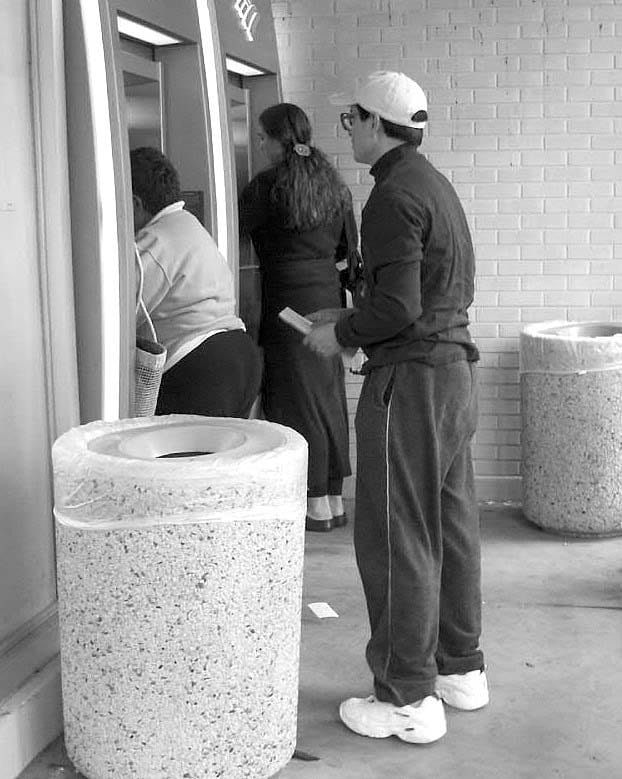
Banks levy such fees on customers who use their ATM machines but do not have an account with that bank. The fees can be as much as $2.50 per visit.
During an hour of oral arguments before a U.S. appeals court panel in San Francisco, the judges seemed unimpressed by lawyers arguing for the bans in Santa Monica and San Francisco.
“What’s the constitutional problem to charge what you want?” Judge Joseph Sneed asked.
Judge Trott added: “You are asking them to provide a free service?”
In July 2000, U.S. District Judge Vaughn Walker in San Francisco struck down the two ATM fee bans after Bank of America, along with other California banks, filed a lawsuit seeking their repeal. The first was approved by the Santa Monica City Council in October of 1999 and the other by San Francisco voters a month later. Santa Monica was the first city to enact the ban on what officials — and many consumers — regard as a “double charge.”
City Councilman Kevin McKeown brought the issue to the forefront after he realized he was charged twice when he used ATM machines in San Francisco’s Chinatown. It irked him enough to bring the issue to the council, where the ban passed 4-3. The council indicated that banks who allowed customers to be charged twice were ripping them off.
City officials and consumer advocates explain it this way: Customers who approach an ATM machine at a bank other than their own pay not only a $1.50 fee, but $2 more tacked on by their own bank.
“But then there is a third fee that nobody wants to talk about which they call an ‘interchange fee,’” said Santa Monica Deputy City Attorney Adam Radinsky. That’s a fee customers don’t see because the banks privately charge each other for their customer’s withdrawals, he said.
“It’s double dipping and it’s unfair to consumers,” Radinsky said. “It’s an unfair business practice. Cities and states have a right to pass laws that protect consumer’s interests.”
But Judge Walker upheld the banks’ argument that federal law, which governs nationally chartered and federal savings banks, trumps any local restrictions. The banks say they are protected by the National Banking Act and the Home Owners Loan Act, which govern them.
In essence, Walker said those congressional acts prevent cities and towns from restricting the fees, either by council vote or referendum.
But Radinsky said Walker’s interpretation of the law is wrong. The National Banking Act actually leaves open cities’ ability to regulate bank fees, he contended.
“The United States Congress has repeatedly spoken on this issue and emphasizes the right for cities to pass consumer protection laws like this,” he said. “The district court got it wrong and we are confident that the law is on our side.”
Both Radinsky and the San Francisco attorneys argued to the appeals judges that they can ban the ATM charges under state consumer protection laws. The states, San Francisco attorney Owen Martikan said, hold the “right to protect the interests of their consumers.”
But Judge Trott later responded, “You’re prohibiting what federal law allows.”
Banks in Santa Monica were forced to drop the extra fees for a couple of weeks directly after the ban went into effect in 1999. Later, Wells Fargo and Bank of America — the state’s two largest banks — filed the suit in San Francisco.
McKeown points out that the fees are not chump change for customers. The original hearing convinced a judge to make the banks put ATM fees collected into escrow for possible return to customers. As a result, banks were ordered to put all the fees into that escrow account until the issue is decided in court. That account has grown to about $1 million.
“Don’t let people tell you ATM fees are small change,” McKeown said. “They are getting ripped off.”
“Don’t let people tell you ATM fees are small change.” — — KEVIN McKEOWN Santa Monica pro-tem mayor
McKeown also said the fees help big banks compete unfairly with small, local banks who have fewer ATMs. In California, 60 percent of ATMs are controlled by Wells Fargo and Bank of America. He said they are the same two banks which, because of the city’s law, electronically barricaded their Santa Monica ATMs against customers who don’t bank with them.
California cities are not the only ones embroiled in such litigation.
Several banking concerns are suing Iowa to overturn that state’s ban on ATM surcharges. And Arkansas, Missouri and Wyoming regulate the amount of those fees the banks can charge.
Some banks charge far higher than the usual amount for the ATM service. One such machine, at the foot of Aspen Mountain in Colorado, charges $3.50. After it defended the fee as a convenience, a local newspaper wrote that the machine might be expected to make mocha as well as dispense cash.
Banks say they need the surcharges to expand their ATM networks. Consumer organizations backing the San Francisco and Santa Monica bans say the fees merely pad bank profits.
Since appeals court arguments involve debates over the law and not trials, they provide forums in which judges frequently question attorneys for both sides — unlike a lower trial court.
The circuit court didn’t indicate when it would rule on the matter. Radinsky said a ruling could be made in a couple of days or a couple of months.
The case is Bank of America vs. Santa Monica, 00-16355.
Associated Press staff writer David Kravets contributed to this report.
Originally published in the Santa Monica Daily Press print edition on January 19, 2002. Read the original PDF.