

Helicopter helps combat crime in Santa Monica
The Santa Monica Police Department now has an eye in the sky, giving officers an edge in fighting crime.
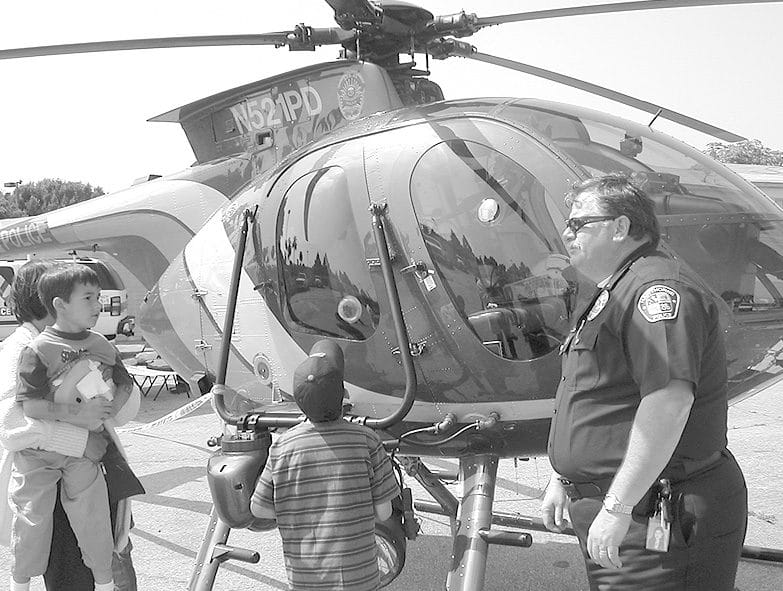
For more than a month, a helicopter from the Hawthorne Police Department has been regularly patrolling the skies over Santa Monica, assisting local officers on the ground when needed.
The helicopter patrols are part of a SMPD program dubbed “Operation Prime Time,” which was initially created to help officers in the field combat a series of gang-related shootings in a troubled eastside neighborhood.
But the helicopter is proving to be more useful than just finding gang bangers, officials say.
The helicopter patrol recently helped SMPD officers search for a burglar running through a Sunset Park neighborhood. From the air, the helicopter lit up dark patches of terrain with its high-powered searchlight, called the “night-sun.” Officers in the air were able to tell officers on the ground where the holes existed their search perimeter.
The helicopter also is equipped with “forward looking infrared,” a thermal imaging camera that can pick up heat sources from the air. The instrument is so sensitive that it can pick up trails of heat left behind by people who recently walked through an area, or cars that still have warm engines. Suspicious vehicles would be then tracked through the police department and their license plate numbers would be checked.
This isn’t the first time helicopter patrols have been used in Santa Monica. The city 40 years ago had its own helicopter program, but a defect in the aircraft’s design caused it to crash into the Pacific Ocean in the mid-1960s.
Since then the city has had sporadic helicopter patrols from the Los Angeles County Sheriff’s office and other nearby cities.
A helicopter from an assisting agency helped nab an alleged gang member who led police on a chase through the Pico neighborhood four months ago. After being pulled over for a traffic violation, the driver and passenger ditched the car and tried to escape on foot. One of the suspects fired on police officers.
It was an officer patrolling by helicopter that located one of the suspects as he ran into a nearby apartment complex. The man’s suspicious behavior caught the attention of the officer, who called in the information to ground troops.
Because the advanced information, officers knew to approach the building carefully. Officers were able to catch the individual before he could escape.
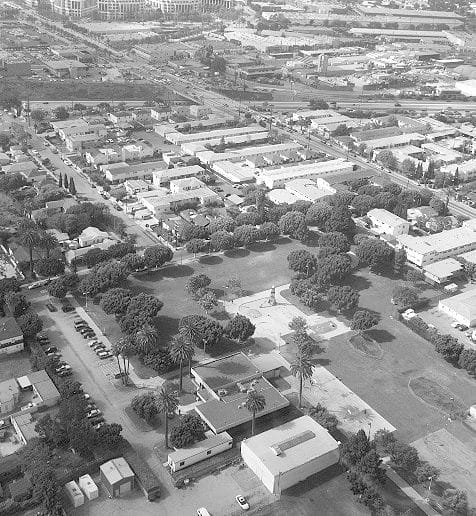
“An airship gives you a platform to operate,” said SMPD Chief James T. Butts Jr. “It gives you a way to see from the air what officers on the ground are prevented from by buildings.”
“An airship gives you a platform to operate. It gives you a way to see from the air what officers on the ground are prevented from by buildings.” — — JAMES T. BUTTS JR. Santa Monica Police Chief
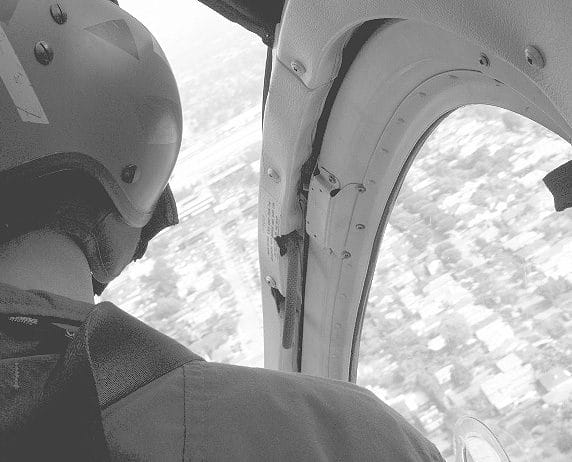
The helicopter and its officers are able to give local police a bird’s eye view of what’s going on in the streets that may be crucial to their investigation.
“The helicopter gets there before anybody else and the officer in the helicopter can give an assessment of any vehicles leaving the scene, or if anyone is on the roof, if there’s fighting in the street, or how the suspect is leaving the scene,” said Sgt. David Thomas, the SMPD’s liaison to Hawthorne’s helicopter unit.
Police said many times just the presence of the helicopter acts as a deterrent to crime. With the helicopter’s presence, more patrols by officers on the ground and community outreach by the SMPD, gang activity has slowed in the Pico neighborhood in the past month.
“Presence of the helicopter can stop an attack,” Thomas said. “It really is an enhancement to the officer’s safety and it provides them with more information of the incident.”
Butts said the helicopter also could be essential to the city’s disaster preparedness plan. Officers can assess damage from earthquakes, floods or mudslides and relay that information to officers in the field, who can then respond accordingly.
Hawthorne’s helicopter is equipped so that it flies with much less noise than normal helicopters. Pilots also fly in a way that reduces noise. On a ride-a-long last Thursday afternoon with Hawthorne’s air unit, the pilot kept the helicopter at 700 feet — an additional 200 feet higher than required. “The balance between the limited noise signature, compared with massive increase in the publics’ and officers’ safety makes me think we lose something when we don’t deploy such a useful public safety tool like we have been able to,” Butts said.
Hawthorne’s helicopter is about five minutes away by air, depending on traffic coming into and out of Los Angeles International Airport. The helicopter typically flies north up the coast below 500 feet, directly under departing planes taking off from LAX.
The helicopter enters Santa Monica over the ocean, flies over the pier and up to Pacific Palisades’border. The pilot then loops around to cover The Third Street Promenade.
After covering the downtown area, the helicopter flies east over the Santa Monica Freeway and Santa Monica College — making crossing routes over the Pico neighborhood, the scene of recent gang activity.
The helicopter is spending several hours a week patrolling above the city and patrols appear to be done at random.
Hawthorne officials aren’t charging Santa Monica for the use of the helicopter now, but they want cities to partner with them to cut down on some of the costs and to expand their operations. The helicopter cost $400,000 and has required about $50,000 in fuel, maintenance and operation since the program began in January.
Hawthorne also flies over several Los Angeles-area cities but none have shown the level of interest in the program as Santa Monica has, Hawthorne officials said.
Butts said the department is still reviewing the helicopter’s effectiveness and has not decided if it would propose entering into a contract with Hawthorne, or starting its own helicopter program.
“We’re not there yet. There is no doubt there would be a massive increase in our capabilities to assess crime and apprehend criminals if we had a helicopter,” Butts said. “But before you do something like that you work with the community and their elected representatives first before doing something like that.”
Originally published in the Santa Monica Daily Press print edition on May 13, 2002. Read the original PDF.