

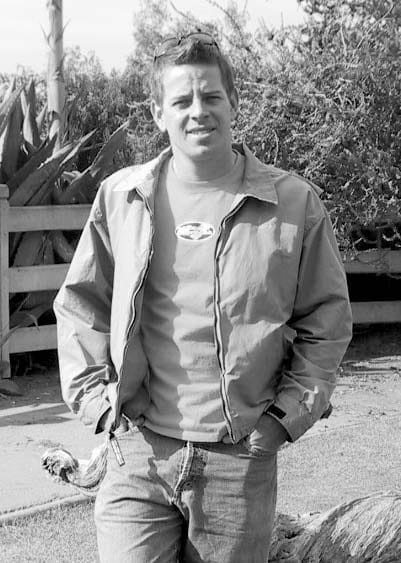
Eco-Challenge race in Borneo lasted more than four days for Jason Middleton
To the casual observer, the relatively new sport of adventure racing conjures images of hard-bodied, superhuman masochists in Polypro bodysuits who climb, swim, ride, run, and paddle to the limit of human endurance.
And while those athletic anomalies comprise adventure racing’s elite, the reality is that the majority of competitors are just like you and me. Weekend warriors — albeit, highly motivated weekend warriors — who share a common passion for competition, the great outdoors, and pushing themselves to their limits.
Above all, adventure racing is a team sport. A collaborative effort that demands cooperation, trust and an unyielding commitment to achieving the near-impossible. Teams race the same courses, but in this demanding sport there is a distinct difference between the leaders and the rest of the pack.
Santa Monica flight instructor Jason Middleton knows better than most about the differences between good and great. At 29, the former triathlete is one of the most experienced adventure racers in the world. A veteran of many races — including six appearances in Eco- Challenge, the sport’s most high-profile competition — Middleton has raced with and against most of the world’s greatest champions.
But it wasn’t until his sixth go-round at Eco-Challenge, which was held last month in the rugged back-country of New Zealand, that Middleton got his first taste of adventure racing life in the fast lane. The team he captains, Team Earthlink, finished fourth in a field of 75 four-person teams. The top-5 ranking marks Middleton’s best-ever finish in a major championship.
“In the past, I’ve always been one of the strongest — if not the strongest — racers on whatever team I raced with at Eco-Challenge,” said Middleton. “This year, I was probably the weakest person on the team, which presented me with a challenge I hadn’t faced before.”
Mark Burnett, executive producer of “Survivor,” created Eco Challenge in 1992. He based the idea on the New Zealand-based multi-sport and European endurance races, popular since the early ’80s. He lengthened the race, removed assistance crews and added a strong environmental message.
Eco-Challenge became the ultimate adventure. Each team of four, comprising men and women, races non-stop for six to 12 days, 24 hours a day, over a rugged 300-mile course using mountain biking, river rafting, horseback riding, mountaineering and fixed ropes, kayaking and navigation skills.
The first team to cross the finish line together, in full complement, is the winner. If a team loses a member due to illness, fatigue, injury or a team disagreement, they are disqualified. Only teams that can work together as friends have any hope of reaching the finish line.
Middleton’s teammates on the reconfigured Team Earthlink included Isaac Wilson and Robyn Benincasa, both of whom — as members of Team Salomon Eco- Internet — finished first last year at Eco-Challenge Borneo, and legendary racer Roman Dial, one of the sport’s founding fathers.
Two days into the race, with Team Earthlink in a heated battle for first place with eventual winners, Eco- Internet, Middleton knew he’d entered a whole new realm of athletic competition.
“I was wiped out,” he said. “When we arrived at PC 4 (Passport Check, a transition area), I just couldn’t believe how fast things were moving. Being up front with the leaders meant moving at what felt like impossible speeds.
“At one point I asked Isaac (Wilson, his teammate), ‘Do you think we’re going too fast? Do you think the pace is too fast?’ Isaac turned to me and said, ‘This is how fast things always move at the front.’”
When things were toughest on the course, Middleton drew strength from the presence of his wife, Tricia, 28. As Eco-Challenge’s event manager, she works tirelessly alongside Eco-Challenge executive producers Lisa Hennessy and Mark Burnett, to insure the race goes off with few hitches. All the while she keeps a close eye on her husband’s progress.
“I worry about him. Even though I totally trust his judgment and his experience, I know that Eco- Challenge and other races are very dangerous, very physically and emotionally demanding events,” said Tricia. “And I also get caught up — especially this year — in the excitement of seeing him compete for the lead.”
“It’s pretty emotional for me, having her there. She’s a big source of strength and inspiration when I’m running on fumes,” said Middleton, who slept a total of just six hours throughout the four-and-a-half days it took to complete the race. The average team finished the race in eight days.
On the heels of the finish in New Zealand, Middleton and his Team Earthlink teammates are preparing for a series of upcoming races, with an eye on the prize at next year’s Eco- Challenge.
“I think we’re as good as any team out there,” said Middleton. “Once we get a bit smoother in the transition areas, we’re going to be tough to beat. Finishing near the top isn’t good enough anymore … I’m in this to be the very best.”
For more information, check out www.teamearth-link.com or www.ecochallenge.com.
Originally published in the Santa Monica Daily Press print edition on November 23, 2001. Read the original PDF.