

CITYWIDE It’s hardly a Hallmark moment.
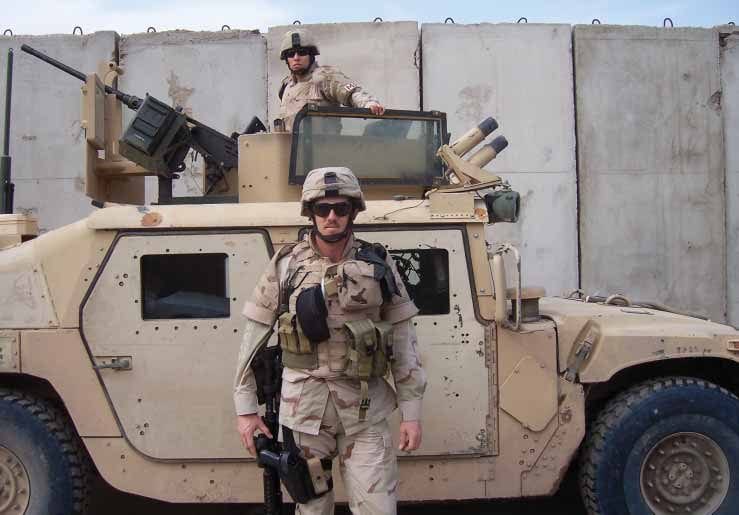
On Monday, Santa Monica Police Officer Lowell Watson will have scant time to blow out his candles before heading south to Camp Pendleton to begin serving his second tour of duty in Iraq.
“Happy Birthday to me, right?”the morning watch patrolman joked on Wednesday.
A city just 8.3 square miles in size, Santa Monica is filled with its share of Iraq War veterans, each of whom have risked their lives for a cause whose validity is being questioned more and more each day, as more and more American soldiers and Iraqi civilians perish.
The conflicts in Iraq and Afghanistan have affected the lives of many Santa Monicans, whether it’s a young Santa Monica College employee who spent five months overseas, not knowing when he might meet his death, or a local business owner whose brother wasn’t as fortunate; a brother shot and killed by an enemy sniper last month.
Each has given a piece of their lives to the country they love.
THE DEPARTING SOLDIER Joining the Marines eight years ago was a matter of dedication to both his country and family for Watson.
One year after graduating from Santa Monica High School, in 1998, Watson enlisted with the Marines, serving in active duty the first four years.
“To be able to salute the flag and actually wear the Marine Corps uniform is kind of a sense of pride,” Watson said, “just like wearing the police uniform and paying service to my community. That is why I wanted to do something in law enforcement.
“Prior to even going into the military, I wanted to serve my community,” he added.
Five years after joining the service, Watson was deployed to Iraq, spending just over seven months in Kuwait and Baghdad.
What helped Watson get through the long days and nights in Iraq was the camaraderie with the members of his unit, knowing that all of his brothers in arms — though they came from different walks of life — were now in the same boat and doing their best to keep each other safe.
They worked in a high stress environment, constantly aware of their surroundings, as any small mistake could prove a fatal one. The soldiers were on their toes 24 hours a day, seven days a week, Watson said.
Their primary duties were force protection and collection of information as well as updating their superiors back home on the situation in Iraq.
More than three years after his return, much has changed in Watson’s life. He’s now a full-time student at Cal State Northridge, working toward a degree in sociology, as well as a member of the Santa Monica Police Department.
The situation in Iraq has also substantially changed in those short few years.
The so-called weapons of mass destruction that led the country to war were never discovered and support has waned considerably, with the Democrats sweeping into office in the 2006 elections amid low approval ratings for President George W. Bush.
Watson keeps up with the situation in Iraq, watching CNN and other news channels. Though it’s difficult at times, he tries not to let politics and the ongoing debate regarding the war sway his decision to serve his country.
“I know I have a job to do,” Watson said. “I have Marines that are under me who have been assigned to me who I swore to do my best to bring back home.
“That is higher on my priority list than whether or not I agree with the war.”
Watson isn’t sure whether this will be his final tour in Iraq. He plans to spend about a year overseas, the bulk of his time in Fallujah. Though his mother isn’t pleased that her son has to leave again, she understands his obligation to the country.
His colleagues at the SMPD have also been supportive, Watson said.
“There are people who care about me and support what I do,” Watson said.
THE RETIREE After spending 22 years in the military, it wasn’t until October 2005 that Master Sgt. Tom Carter, an events technician at Santa Monica College, was first shipped off to war.
A member of the National Guard’s 49th Military Police Brigade, Carter spent a year in Baghdad training the Iraqi police.
Members of the Iraqi police force welcomed American soldiers and the skills, knowledge and training they had to offer.
“Most of the police officers there had a real interest in trying to make things better,” Carter said. “Some needed a job.”
Though his unit offered basic marksmanship training and teaching of basic police skills, Carter specifically provided computer training.
As the father of three boys, Carter said thoughts of death occasionally cross his mind. But unlike many other military personnel in Iraq, Carter’s unit was not placed in a combat zone where he had to be fearful of roadside bombings or snipers. The unit stayed in one of the larger military bases, called Camp Victory. The unit included a post exchange that included virtually everything a person would need, though it lacked variety, Carter said.
Iraq was much different than how he imagined — a country with an endless sea of sand. There was not only more vegetation than he expected, but Iraq was also pretty well developed.
After spending his first four years in active duty, six subsequent years in the reserves and the last 12 years in the National Guard, Carter was finally able to retire from service on March 14.
When the United States made the decision to go to war, Carter said he wasn’t sure whether it was the right choice. One thing he was sure of was if the country did go to war, it would have to go at it 100 percent.
Though progress in Iraq is going slower than most people would prefer, it’s actually going at a faster rate than what Carter had anticipated. He had foreseen the troops pulling out around 2010, but now believes the troops can start leaving in 2008.
“I thought we had done a lot of good,”
Originally published in the Santa Monica Daily Press print edition on May 12, 2007. Read the original PDF.