

City gives former reporter Santa Monica-style sendoff
(Editor's note: This is an essay in a two-part series written by former Daily Press reporter John Wood, who left Santa Monica several weeks ago and is on a slow boat to China. This weekend’s edition will feature a glimpse into a six-week American tour taken by Wood before his departure.) It wasn’t easy leaving Santa Monica.
I spent nearly three years as a news reporter for the Santa Monica Daily Press, churning out more than 1,000 front-page articles, depending more than anything else on my old single-speed beach cruiser.
My bike took me daily from a shoebox apartment near the beach in Ocean Park to the cramped Daily Press newsroom at the Third Street Promenade and, quickly, to countless crime scenes, jury trials and interviews.
Leaving Santa Monica meant selling the old yellow-and-red cruiser, along with the rest of my things. It also meant saying good-bye to my native city, to the paper, and to family and friends for the next two-plus years. My wife Louisa and I start new jobs July 2 as college teachers in Sichuan, China.
We decided long ago to live up the transition. Before launching on a six-week, cross-country road trip to visit family and friends, camp and see the country, we staged a blow-out party at our apartment complex at 125 Pacific St., a pur-portedly historic building just west of the dog park on north Main Street in Ocean Park.
The low-slung, plain-looking Spanish-style building at 125 Pacific St. has been designated a historic landmark by officials at City Hall, primarily because it’s situated around a communal courtyard. In the courtyard is one small lemon tree on a long, narrow strip of grass bounded by 24 tiny apartments.
It’s hard to predict what will happen to the decrepit old building. Preservationists say it’s among the last of its kind and it must be saved. Cedar Properties, the owner, has pointed to the bulky condominiums surrounding their property and appealed the historic designation to the Santa Monica City Council. They claim they’re losing money by being denied their right to develop, and have hired architect and school booster Ralph Mechur, who drafted plans for upscale condominiums at the site.
Cedar even agreed to pay an undisclosed sum to one outspoken tenant who had long enjoyed rent control protection. In exchange, the tenant moved out and permanently abandoned her campaign to save the 1920s-era building. Deputy City Attorney Adam Radinsky has warned Cedar they are being watched for possible criminal infractions after serving half the tenants with eviction notices that later were retracted.
Sketchy and arguably illegal tactics aside, the idea of at least renovating the property made a whole lot of sense to us. The building is in disrepair. Our bathroom and kitchen walls had persistent black-and-green mold growths. Major sewer and electrical problems were common. Rats scurried underneath the floors and in the walls at night. One night, Louisa came home from work and found one rat, with a body measuring more than a foot long, making a nest out of the arm of our living room sofa.
Despite sometimes unsettling conditions, we loved our tiny apartment, and it was mostly because of the courtyard, which was rimmed by small personal gardens and adorned with old bikes and surfboards. It made the place. We would sit on the lawn, play cards and drink margaritas on summer evenings. We strummed guitars and banged on drums and laughed with our neighbors. We actually knew and liked our neighbors.
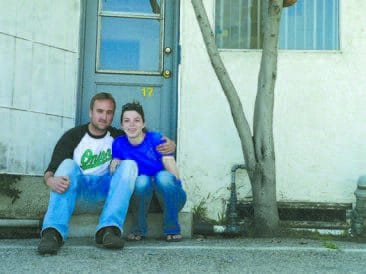
It was fitting then for our final farewell party to be staged there, with the nexus between our Apartment No. 17 and Apartment No. 8, where a South African friend named Kurt lived. Santa Monica band Driver set up under the lemon tree and played covers of The Police and Bob Marley, along with several of their own songs. Banquet tables full of food lined our bare apartment and outside stood a keg of Heineken, and a table with several bottles of wine and liquor, sodas, water and ice.
About 150 people filtered through the courtyard that Saturday from 3 p.m. until 9:04 p.m., when a trio of Santa Monica Police officers shut us down. They said they had several complaints, some from several blocks away on Fourth and Fifth streets, up over the Ocean Park hill and back by Los Amigos Park and Santa Monica High School. We were told there would be no further warning. One more noise complaint, from any resident, and we would be fined $500 for disturbing the peace.
The band put down their instruments and we continued drinking and laughing and saying good-bye until well past midnight. Among those present for the little party were Santa Monica teachers, shop owners, lawyers, office workers, musicians, artists, businessmen and business-women, even an eight-year local homeless man named Rico, a raspy-voiced veteran who twice earned the Purple Heart.
In many ways the mixed crowd at the garden party reminded me of my farewell at the paper. Editorial staffers at small newspapers typically don’t get a lot of positive recognition and during my time in the newsroom, editor Carolyn Sackariason fielded dozens of calls from readers upset or angry over my reporting, but a fraction as many calls that were complimentary. This held true regardless of the topic.
Sackariason taught me that as long as both sides were complaining, things were on track. Under that theory, we at the Daily Press were doing a bang-up job. We had business interests accusing us of being blatantly liberal and renter groups convinced we were in bed with the chamber of commerce, heavily slanted against the so-called progressives.
Then, at the end, something unexpected happened. I sent out a mass e-mail saying thank-you and good-bye, and introducing my replacement. In response I received generous appraisals of my work from people in all corners of the city, many of them ideological opposites. E-mails came from people I deeply respected and depended upon for information, like Superintendent of Schools John Deasy, City Councilman Herb Katz and Santa Monicans for Renters Rights cofounder Nancy Greenstein. They came from Mayor Pam O’Connor, columnists Bill Bauer and Frank Gruber, City Attorney Marsha Moutrie and landlord attorney Rosario Perry, among others.
One e-mail writer said how fortunate my move would be for the people of China, but how unfortunate for the people of Santa Monica and for the field of journalism. Some others wondered if I would someday rejoin the reporting world. Having started in journalism as a 12-year-old guest editorial writer and continued with school papers, a London travel outfit and a Santa Barbara business magazine, I knew that to veer away from reporting at age 27 and work for the Peace Corps, our employer in China, was not an orthodox move. To leave the newsroom is to lose precious momentum.
Still, many of the editors I consulted with told me the qualities that made me want to join the Peace Corps, most notably curiosity and a sense of adventure, were the same traits that made me a good reporter. An editor at the Ventura Star said he knew they were uncommon but that he looked for resumes like mine. A senior Associated Press staffer said any editor who counseled me against going to China was the kind who wanted their reporters “chained to their typewriters, heads down, rewriting press releases. Dreadfully dull.”
That advice helped, but really the decision already had been made. My bride Louisa, 24, a Santa Monica teacher and cellist for the Santa Monica College orchestra, and I had decided long before that we wanted to travel the world and make the most of our early married years. Life is short, after all, and we had good role models in parents, siblings, and aunts and uncles who had served with the Peace Corps.
Still, it hurt to say good-bye. I was born in Santa Monica and my father and stepmother live there still, as do two of my three brothers. Plus, I had to sell my red-and-yellow beach cruiser, made in the U.S. by a company called Manhattan. A young woman driver for the Big Blue Bus bought it for $100, also pedaling off with a long skateboard I rode often on the concrete banks at Paul Revere Middle School.
Watching the woman ride off with the skateboard under her arm reminded me of all the times I’d slung a camera over my shoulder, shoved a handful of pens and a reporter’s notebook in my pocket and set off to get a story. Often I’d return to the newsroom even more heavily loaded down, with press release folders and photo prints under arm. Sometimes, usually on a Friday, I’d also be carrying a 12-pack of beer for the office.
That old cruiser was chained to a bench on the Promenade in July of 2003 when Russell Weller drove through a crowded Farmers’ Market and killed 10; it was on the sidewalk of Adelaide Drive in May of 2004 as I interviewed Kennedy family scion Bobby Shriver about the illegal height of his hedges; and it was locked to a chain-link fence at Edison Elementary when parents in fall of 2004 lashed out against city leaders in the wake of yet another drive-by shooting. It also was the vehicle for many “rolling” photo shoots, where I battled against more experienced and better equipped news photographers for shots of the Olympic torch, and of President George W. Bush and Sen. John Kerry, among others.
Even now, weeks after having left my native Santa Monica, it’s the memory of that bike that most makes me miss Santa Monica. The old cruiser never needed gas or a parking space. I never had to change a dollar, or five, into quarters to feed the meter for it, and it never caused me to get a parking ticket. I suppose it's fitting that I’m reminded of Santa Monica most vividly by something lacking many of Santa Monica's most infamous traits.
Originally published in the Santa Monica Daily Press print edition on July 1, 2005. Read the original PDF.