

Students wait for species to be catalogued
DEATH VALLEY When Luis Suarez spent a hot September afternoon collecting every ant and spider in sight, the college sophomore did so with aspirations of being the Christopher Columbus of entomologists, hoping to come across a bug whose species was undiscovered.
The long shot of an opportunity came true for Suarez and his fellow Santa Monica College classmates earlier this month when they learned they had picked up an undiscovered species of jumping spider.
“I was hoping it would happen because the (National Park Service) told us that it hasn’t happened before in Death Valley and there’s always a possibility to discover a new species,” Suarez said on Tuesday. “I was looking everywhere... in the weirdest places, like under bushes.”
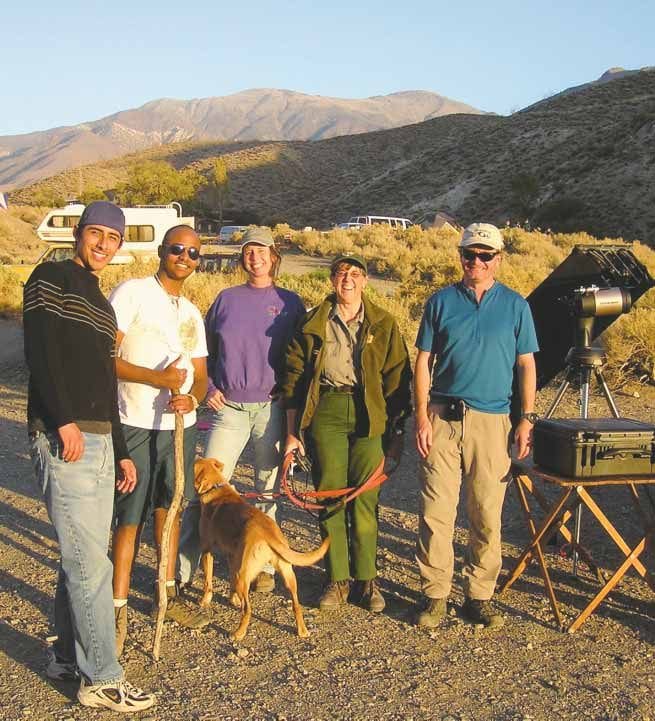
The environmental studies student was among the more than 30 SMC students that participated in Professor William Selby’s one-unit field studies course in the fall semester, spending a three-day weekend in late September studying the geologic history of Death Valley.
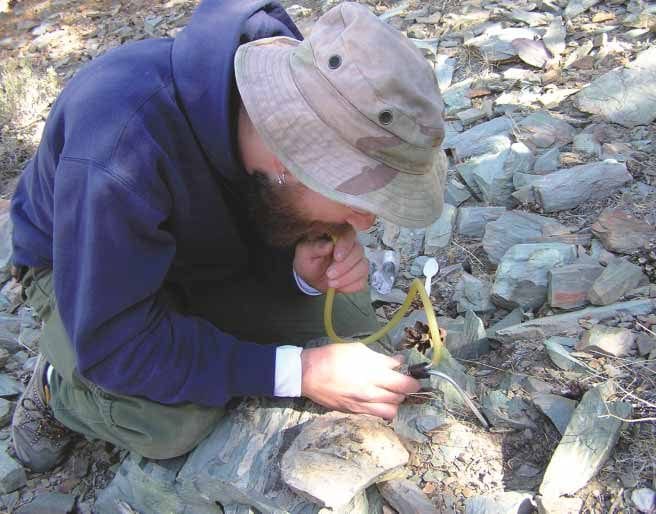
As part of the trip, the students spent one afternoon assisting the National Park Service (NPS) in its efforts to catalogue all the plants and animals in Death Valley, picking up nearly every living creature they saw crawling across the sand.
The specimens, which included more than 300 ants and 21 spiders were sent to an entomologist in New Mexico who recently notified Selby that among the bugs was a spider whose species has not yet been identified.
Out of the 11 species of ants picked up, one has never been seen before in the United States, said Susan Teel, the director of the California Mediterranean Research Learning Center, an NPS program that works with Selby’s field courses every semester.
According to experts, there are more than 40,000 species of spiders that have been identified, approximately 3,000 of which can be found in the United States.
Selby, who has offered the field courses at the college for more than 20 years, said on Tuesday that it is often university researchers and graduate students that typically discover new species, not community college students.
“It’s often university researchers discovering new species all the time and there are millions of species on the planet we still haven’t catalogued or identified so you can see our goal is mainly education,” Selby said referring to the intent of the one-unit field course. “We don’t do as much research at a community college... so it’s a little bit more unusual for us to go out and be able to collect a new species.”
Three different groups of students each ended up collecting the unidentified spider species, the specimens were found at 4,000, 9,000 and 10,000-feet elevation, Teel said.
“The fact that the students were part of the discovery adds a level to the learning experience,” Teel said. “You just can’t duplicate that.”
It could take years before the spiders are assigned a species name and properly identified in scientific publications. The students could have a say in the name of the spider species, however, Suarez said it hasn’t crossed his mind.
Originally published in the Santa Monica Daily Press print edition on January 30, 2008. Read the original PDF.