

Police say Jeremy Naidoo resisted arrest and fought with officers
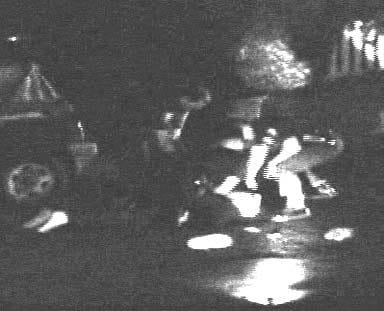
OCEAN PARK — A videotape has emerged that shows a Santa Monica police officer repeatedly strike a drugged-up suspect as he pleads for mercy in the street here nearly three years ago.
Police said Jeremy Naidoo, then 28, fled on foot after being pulled over for running a stop sign. As officers chased him, Naidoo tossed a bag of drugs into the street and initiated a fist fight with officers, according to police.
Naidoo, who denied ever hitting an officer, was struck at least five times in the head and shoulders with special police-issued nunchaku, a weapon commonly used in the martial arts. He is suing the officer who struck him, as well as two officers who helped restrain him, for excessive force.
A federal judge is expected to decide next week if a jury should view the video, which was filmed by a neighbor. The tape begins after Naidoo has been tackled by police, as he lies face-down on the pavement. Attorneys at City Hall hope to dismiss the footage from trial because it doesn’t depict the events that preceded the beating.
Naidoo’s lawyers claim the footage doesn’t just show a police officer using excessive force, but also proves that officers made significant self-serving omissions and misstatements in their reports.
The amateur footage, recorded in the early morning hours of May 31, 2002, was shot from an upper-level balcony near Third Street and Pier Avenue. It begins with SMPD Officer Salvador Lucio, who was a back-up officer just arriving on the scene, striking Naidoo four times over the head and shoulders. Another officer is seen kneeling on Naidoo, pinning his right arm behind his back. A third policeman is standing above Naidoo, partially blocked from view.
As he is struck, Naidoo is heard pleading with the officers. He screams, “Don’t hit me, please don’t hit me!”
Lucio then shouts, “Get your arm back! Get your arm back!” to Naidoo, whose left arm is stretched out in front of him on the pavement. Naidoo moves his arm back and the third officer leans down as if to handcuff it, though Naidoo’s wrists are blocked from the camera’s view.
Seven to eight seconds later, Lucio delivers a fifth blow.
Naidoo didn’t suffer any debilitating injuries from the hits, though his lawyers said he was treated while in custody for welts and abrasions on his head and shoulders. They contend Naidoo’s physical pain lasted for weeks.
With his lawsuit pending, Naidoo declined to comment. The three officers being sued and Police Chief James T. Butts Jr. also declined to discuss the case, at the advice of City Attorney Marsha Moutrie.
SUSPECT GIVES CHASE Deputy City Attorney Carol Rohr said Naidoo did nearly everything wrong a suspect could possibly do. He ran a stop sign. He didn’t pull over right away. When he did pull over, he was sweating profusely, acting nervously and he demanded officers write him a ticket — while cursing at them.
“This is the person the police had to deal with,” Rohr said. “He’s acting excited, he’s acting hyper, he’s looking from side to side.”
“This is the person the police had to deal with … He’s acting excited, he’s acting hyper, he’s looking from side to side.” — This was ridiculous. The man was already cuffed. He was hog-tied. And they (sic) beating him...” CAROL ROHR Deputy City Attorney
Rohr said Naidoo repeatedly reached under his seat and officers were concerned he may have been grabbing for a weapon. Naidoo also refused to show his hands, even after officers pulled their guns and threatened him with pepper spray, Rohr said.
When the officers reached into his car, Naidoo pushed his way out of the car and ran, tossed his drugs and continued into the street, Rohr said. Officers chased and tackled Naidoo, while radioing for backup. That’s when Lucio arrived and repeatedly hit Naidoo with the nunchaku because he continued to resist, Rohr added.
“The initial strikes don’t have any effect,” Rohr said. “This person is very well built, plus under the influence.”
Naidoo has admitted to smoking cocaine and speed the evening before he was arrested, according to Rohr.
Rohr hopes to keep the video away from a jury, because what’s at issue in excessive force lawsuits is whether an officer used objective reasonableness, when considering the total situation. She said if the video is shown it should not be viewed in slow motion, because the jurors should see what took place just as the officers involved in the tussle experienced it.
“Video is fast moving, split second decisions,” she said, adding when watched at normal speed Lucio’s use of force appears reasonable. “In this situation, you do see his (Naidoo’s) hand. It’s not static. It’s not sitting like a lily on a coffin or something.”
The nunchaku used to hit Naidoo were made from two pieces of heavy, polyurethane plastic, connected by a short string of braided nylon. The nunchaku can be used either to restrain or hit a suspect. In this instance, Lucio held the two ends of the nunchaku together, with four inches to six inches protruding above his fist, according to Rohr, who said police are specially trained to handle the weapon.
Though SMPD Chief Butts declined to discuss the particulars of the case, he offered his insight into the dangers officers face when approaching an unknown or potentially dangerous suspect.
“Our officers are trained to use that amount of force to overcome the resistance that’s encountered,” Butts said. “Now, there are certain actions that can occur that can escalate the amount of force used very quickly. A couple instances: One, when the person you’re contacting possesses or gives you reason to believe that they possess, or are going to secure, a weapon. And another is when a person that you contact flees, or attempts to destroy contraband or illegal evidence.”
WITNESSES CALLS 911 Naidoo had been in trouble with authorities before his May 2002 arrest. In addition to two outstanding Santa Monica traffic warrants, Naidoo had prior convictions for driving under the influence, possession of a dangerous weapon, hit and run, resisting arrest and robbery, according to police records.
SMPD Officer Michael Bambrick, one of the three officers being sued, wrote in his police report that Naidoo on the night of his arrest was carrying more than 11 grams of powder cocaine, 1.4 grams of rock cocaine, less than a gram of marijuana, a glass pipe and a Viagra pill.
Still, Naidoo’s attorneys Don Randolph and Fran Campbell said they were confident in their case, accusing the SMPD of “outrageous government conduct.”
“If they had beaten him like this with a baton, Jeremy would be dead,” Randolph said. “His head would be split open.”
Randolph and Campbell also pointed to the testimony of two eyewitnesses who were on the street the night of the arrest.
One of the witnesses was Evan Brown, who shot the video footage. According to Randolph and Campbell, Brown will testify that while retrieving a sleeping bag from his car, Brown heard one of the officers say, “Yeah, f*ck him up!” He then ran upstairs and began filming.
Also expected to weigh in at trial was eyewitness Daniel Weitzel. According to Randolph and Campbell, Weitzel will testify that, after being tackled by officers, Naidoo was on the ground and not resisting for 45 to 90 seconds before Lucio arrived on the scene and struck Naidoo with his nunchaku.
Weitzel called 911 to make a complaint shortly after the incident. He told the emergency operator he was scared for his life because of the brutality he had witnessed, but was adamant an officer be sent out so he could make a statement, according to a transcript of the call. “... this man was already hog-tied, already cuffed,” Weitzel told the 911 operator. “I have two witnesses with me... And this was the most brutal thing I’ve ever seen, and I’ve seen some brutal stuff.
“I have two witnesses with me... And this was the most brutal thing I’ve ever seen, and I’ve seen some brutal stuff. This was ridiculous. The man was already cuffed.” — DANIEL WEITZEL Witness who called 911
Naidoo’s lawyers said they also would raise at trial apparent omissions or errors in the police reports.
Lucio in his report stated Naidoo was twisting and turning, and hiding his hands underneath his body in the waistband area. The video seems to show otherwise. Naidoo does not appear to struggle with officers, and has one arm pinned behind his back, with the other stretched out in front of him.
What’s more, while the video shows Lucio striking Naidoo at least twice after his right arm is pinned back, and once more after his left arm is also back, Lucio in his report states all but one of the hits were made when Naidoo still had both hands free.
The last hit, Lucio wrote, was just before Naidoo gave officers his left arm. In the video, however, it appears as though Naidoo surrenders his left arm seven to eight seconds before Lucio delivers the final blow.
Randolph and Campbell also criticized Bambrick’s police report, which never referenced the use of nun-chaku. Though Rohr said it was up to Lucio to report his use of the nunchaku in his own detailed report, Randolph and Campbell pointed out that Bambrick’s report is very detailed about the events leading up to Lucio’s arrival, then omits the nunchaku altogether.
Bambrick’s report also failed to mention that Lucio arrived on scene before other back-up officers, which the video clearly shows.
In his report, Bambrick described a fist fight and struggle with Naidoo, adding that after he and his partner, Officer Robert Lanam, subdued Naidoo, “I was knocked forward as Ofc. Lucio, Ofc. Fujita, Ofc. Bendinelli and Ofc. Leyva arrived and swarmed over Naidoo.”
Randolph said Lanam later claimed he never saw Lucio strike Naidoo, though in the video the nunchaku are used just inches in front of him.
“It’s just laughable,” Randolph said. “If they’d been any closer, Lucio would have hit him in the face.”
NAIDOO’S DAY IN COURT It was more than a year before City Hall learned of the video footage, and Naidoo’s lawyers handed it over reluctantly.
Brown gave his video to Naidoo’s lawyers weeks after the incident. They turned it over to the Los Angeles District Attorney’s Office, who, after investigating the case, declined to pursue criminal charges against the officers. Naidoo’s attorneys in May 2003 filed a civil lawsuit in Los Angeles Superior Court. Their hope was to take depositions from the officers before they were able to view the footage.
Attorneys at City Hall were successful in their request that the case be moved to federal court, where rules governing how lawyers share evidence are stricter. Naidoo’s attorneys then were obligated to hand over the footage. A copy of the video was made public after it was submitted to the courts late this past October.
Meanwhile, the case developed on several other fronts. Prosecutors agreed to dismiss the seven felony charges against Naidoo, who had faced a third strike and 25 years to life in prison, if he completed a drug diversion course. In the civil suit, United States District Court Judge Audrey Collins dismissed the litigation against City Hall and Butts, along with the eight other officers who were responded to the scene.
A pre-trial settlement in the case appeared unlikely last week. Rohr said Naidoo’s lawyers in an earlier settlement hearing had demanded a six-figure sum to drop their case, in the “mid-or mid-to low-range.” Randolph said Rohr had never extended any offer to settle. He declined to name an appropriate amount.
Judge Collins was expected to view the video footage Feb. 14 and make a determination as to whether to permit it at trial. A jury trial is scheduled to begin March 1 at the federal courthouse in downtown Los Angeles.
Naidoo is the son of Sylvia and Vassie Naidoo, who for 20 years owned and operated Palisades Bakery in the Pacific Palisades. Vassie Naidoo, a native of South Africa, sold the bakery in 2002 to focus on martial arts, which he has been practicing for 38 years. He said he was deeply troubled by the video depicting his son’s interaction with the police.
“Besides my son, I would hate to see anybody go through that and, of course, if it’s your son you have more feelings,” said Vassie Naidoo, 57, a sixth-degree black belt in Goju-Ryu karate who now runs a Santa Monica martial arts studio.
Though Jeremy Naidoo lived in Santa Monica at the time of his arrest, and worked part-time for his parents, he has since moved in with his aunt and uncle in Las Vegas.
“I think it’s more comfortable to be out there,” Vassie Naidoo said last week. “He can lead a normal life... It’s like when you sleep with dogs, you end up with fleas — so you want to get away from the environment and start a new life.”
Originally published in the Santa Monica Daily Press print edition on February 7, 2005. Read the original PDF.