

Next part of public process on plan to include ‘choices’
CITY HALL — Citizens fearful of further development in Santa Monica called on elected leaders this week to prevent a recent report from allowing this quaint beach town to become New York or Hong Kong.
More than 40 residents outraged by the release of the “Opportunities and Challenges” report — part of City Hall’s ongoing process to update Santa Monica’s general development plan — demanded on Tuesday that elected leaders put into effect a “zero” to “minimal” growth policy in Santa Monica for the next 20 years. In light of the controversy, city officials urged staff to make sure the public’s comments were heard as the land-use plan moves forward.
In August, City Hall’s planning department released the completed “Opportunities and Challenges” report, which builds on community visions presented in the “Emerging Themes” report reviewed by the City Council and Planning Commission in April.
As part of the two-year, ongoing overhaul of the city’s development and traffic plan, the latest report examines existing conditions and trends that pose challenges to the kind of community Santa Monicans want in the future. It also identifies 16 focus areas for further exploration during the next phase of the project, categorized as “choices.”
While elected officials made it clear the report is intended to ask public policy questions, not answer them, residents who spoke on Tuesday said a range of development options proposed by the document undermines a process that was held in the spring when community members helped “Shape the Future” of Santa Monica’s general plan by participating in workshops and surveys.
According to residents at Tuesday’s meeting, the public wants as limited growth in the city as possible, which the report failed to reflect.
“I’m concerned with the direction you are going,” said Ellen Brennan, a Santa Monica resident. “This report is a developer’s dream, and we’re not buying it.
“It’s 180 degrees off course.” Residents said there were myriad failures within the report. Many lamented the lack of policy language regarding the city’s need to secure more rent-controlled and affordable-housing units. Others were dismayed by a suggestion the city could accommodate as many as 14,000 additional housing units built over the next 20 years, indicating such a proposal would prevent Santa Monica from keeping its “town scale” or properly address parking an traffic issues.
“We don’t want 14,000 more housing units unless you can promise that the people who live in them will work in Santa Monica and not use cars,” said Zina Josephs, a member of the Friends of Sunset Park neighborhood group.
Others were a bit more direct in their requests. “Solve the traffic problem with the present density, which doesn’t seem to be working, before you do anything else,” said Marshall Williams, a Santa Monica resident.
Not only did residents feel the report failed to address development issues as they relate to parking and traffic woes, they said the middle class also would be squeezed out by redevelopment scenarios suggested in the report.
“More density doesn’t necessarily bring more affordable housing,” said Santa Monica resident Joel Brand. “Affordable housing is what keeps getting demolished in this town.
“If you really want more of it, stop tearing it down.” Others said the report needed to include better policy language to preserve more buildings, increase the retail options for locals, and foster the school system.
Denny Zane, chair of Santa Monicans for Renters’ Rights, said it was time City Hall begin taking a more proactive role on development issues to assuage public concerns.
Zane said there needs to be a system in place that allows City Hall to put an annual cap on development citywide. He said if City Hall began regulating its redevelopment process in such a way, developers would be forced to compete for use of limited space. As a result, City Hall would be able to award use for sites to those developers whose proposals best address parking, traffic or other public needs.
“We need to think about a model that caters more to the community,” Zane said.
The residents’ concerns over growth was shared by councilmembers.
“I truly believe a huge segment of the city’s population was represented here tonight, and what they want us to do is nurture a historic, traditional scale in Santa Monica,” Councilman Ken Genser said. “We really need to look at policies that will truly limit the growth of the city.”
While noting the desire to limit growth, some coun-cilmembers said a policy that aimed to halt development all together was unrealistic. Councilman Herb Katz said he favored the “town scale” approach to Santa Monica’s future size, while indicating there were areas in the city that afforded opportunities for more building height.
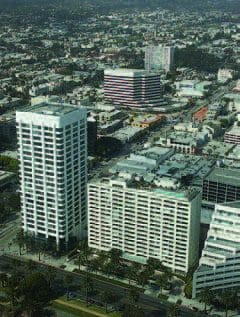
Katz said residential areas that are largely comprised of homes should remain virtually untouched. However, sections such as downtown or the Wilshire commercial corridor may provide opportunities for increased building height that wouldn’t necessarily jeopardize the quality of life for residents.
“What we want is the Santa Monica we’re used to and keeping it that way,” Katz said. “Buildings need to be proportionate to the space around them, but we can control what we allow in our commercial areas.”


Originally published in the Santa Monica Daily Press print edition on October 1, 2005. Read the original PDF.