

OLYMPIC BLVD. As rents and land values continue to rise to unprecedented, sometimes unimaginable levels, more residents are finding it difficult to maintain. That includes the city’s starving artists — those creative minds that nudge the status quo, making Santa Monica the progressive and attractive city that everyone seems to want to live in these days.
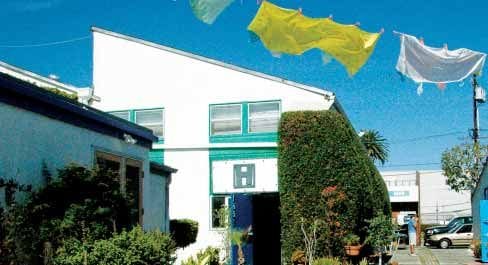
If it wasn’t for the 18th Street Arts Center, a multicultural, multimedia arts community tucked away on a cul-de-sac just north of Olympic Boulevard, many of those starving types wouldn’t even be in Santa Monica today, and they wouldn’t be creating the paintings, films, plays and ballets that captivate the hearts and minds of the public.
Leo Garcia can testify to that. As the executive and artistic director of Highways Performance Space, located in one of the five buildings at 18th Street — once home to a bullet and light bulb factory — Garcia has come to rely on the cheap rent charged by the non-profit arts institution, whose mission is to support artists and organizations that demonstrate social consciousness and spiritual awareness, and those are dedicated to community and diversity.
Highways considers itself to be a leading alternative cultural center with bold new performances not currently accepted by the mainstream. Conversely, it doesn’t draw the large crowds or donations from the establishment, making its deal with 18th Street all the more significant. “Without the low rent, we wouldn’t be able to present the kinds of shows that we believe are important, but do not get the kind of recognition they deserve,” Garcia said, as ballet dancers behind him pulled a long, white piece of cloth back and forth in a delicate, sensual version of tug-of-war.
“We are looking to help underserved artists and help develop people who are going to be the next generation of great artists,” he said. “And because of the support we receive from 18th Street and the other artists and organizations here, we are able to do that.”
Having been at the center since 1995, Highways feels that it plays an important role amongst the community of artists, which has included filmmakers, sculptors, painters, photographers and playwrights. That is why Garcia has hope that Highways will have a home when the center is demolished and rebuilt in the next three to five years.
“Without it, I don’t know how we can continue our mission,” Garcia said. “We can’t overextend ourselves.”
Administrators at the 18th Street Arts Center are planning to build a new arts facility on the site and are currently seeking artists to become part of the design team led by award-winning architects Pugh + Scarpa, a Santa Monica firm.
The plan is to replace the aging warehouses with a new, 80,000-square foot arts facility to expand its support to artists and art organizations. The new arts center will include a cultural commons space for multiple small performing and visual arts organizations and up to 30 affordable live-work studios.
A flexible theater and workshop space for performing groups is envisioned, along with a professional gallery and multiple nonprofit offices. Five to ten of the live-in studios will continue to support 18th Street’s International Exchange Program for short-term residencies.
This concept is nearly a three-fold expansion from 18th Street’s current campus of 30,000 square feet — situated on the same site as the planned redevelopment.
Naturally, artists like Garcia are concerned about what changes may come with a new center. Will it attract more of the mainstream crowd and lose all that makes it unique, or will it simply be better suited to be a comforting, supportive base for those willing to go out on a limb?
“I think it will change, but it’s hard to tell where it’s going to go,” said Lita Albuquerque, an artist-in-residence and one of the 43 individual artists who have called the center home since it was founded in 1988. “I think that they will maintain their goals and their mission, but physically, how will the change affect it? This is a very historic place, and there will definitely be a shift.
“Whether it will be good or bad, I don’t know.”
The center does have a rich history, having been home to feminist artist Judy Chicago when she completed her seminal work, the “Dinner Party” installation, which helped change the face of the local art community.
“Before that, the art world was very segregated, with white males dominating,” said Clayton Campbell, 18th Street’s artistic director, who also has a studio on the premises. “That changed significantly in part to the ‘Dinner Party,’ and places like 18th Street. Here we provide a home for artists working in every medium under the sun.
“It truly is one of the premier multicul-tural art centers.”
The community can come see for itself this Saturday (Sept. 29), when it hosts ArtNight, a free community event with live Afro-Latin jazz, food and drinks, and plenty of art to gaze at. The event is the one of the center’s biggest and is intended to be a night where residents can come and explore what the center has to offer. BIRTH TO THE ARTS The 18th Street Arts Center came into existence in 1988, a complex of artist live-work spaces and the headquarters of High Performance magazine. Artist Susanna Bixby Dakin, writer Linda Frye Burnham and artist Steven Durland had been working together for years, documenting the alternative art world through a magazine and Astro Artz publications. In the late ’80s, they decided artists needed more affordable studio space.
Dakin found an acre of land in Santa Monica’s Pico neighborhood, which was recently zoned specifically for manufacturing and the arts, and asked Burnham to help her develop it as affordable arts studios.
Burnham and Dakin conceived of the 18th Street Arts Complex as an intergen-erational, intercultural, multidisciplinary creative hub that would be as diverse as possible. Within a year, it had become a creative cluster of studios, galleries, offices and public spaces, housing some 30 tenants — artists ages 20-60 from many dif-
Originally published in the Santa Monica Daily Press print edition on September 29, 2007. Read the original PDF.