

Kwanzaa is only 40 years old
CITYWIDE — Christmas may be over, but the holiday festivities continue as Kwanzaa — a holiday celebrating African-American heritage — begins today and continues until the first of the year.
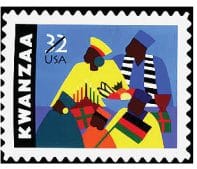
Kwanzaa,a relative newcomer to the December holiday scene, is a non-religious spiritual celebration of African American culture that was started 40 years ago by Dr.Ron Karenga,a professor of Black Studies at California State University at Long Beach.
The holiday means “first fruits of the harvest” in Swahili.
Kwanzaa is guided by seven principles, each of which serves as the theme for one day out of the week-long celebration. It begins today with the principle of “Umoja,” which means unity, and continues Wednesday with the theme of “Kujichagulia,” or self-determination, and “Ujima” (Thursday — collective work and responsibility); “Ujamma” (Friday — cooperative economics); “Nia” (Saturday — purpose); “Kuumba” (Sunday — creativity); “Imani” (Monday — faith).
As part of the celebration, families gather to discuss the guiding principle of the day and apply it through activities. Dr. LaRita Brown, a member of the First AME Church by the Sea, an African Methodist Episcopalian church on Michigan Avenue, said she and her children discuss business investment on the day of cooperative economics and bake homemade cookies.
Much like Hanukkah and the menorah, Kwanzaa has its own special set of candles, called a kinara. A candle is lit on each night of Kwanzaa, starting with the black candle in the middle on the first night. The seven candles symbolize the seven guiding principles of the holiday.
The First AME Church by the Sea plans to hold a special Kwanzaa service for its congregation this week. The church is also affiliated with the Kwanzaa Heritage Festival and Parade that will be held in Los Angeles.
“The Bible itself is an extension of all the issues we have here in Kwanzaa,”said Rev. Reuben W. Ford of the First AME Church. “It’s not a religious holiday, but we support anything that encourages the spirit [of family].”
The Kwanzaa Heritage Festival and Parade is considered the largest event celebrating the African American holiday in Los Angeles County. The week-long festivities begin today with a candle-lighting ceremony at the African American Arts Museum in Exposition Park and culminates with a parade on Dec. 30 in Leimert Park Village in Los Angeles. The fifth annual event will feature an international food court, a children’s village and marching band.
“Kwanzaa is a celebration of family, community and culture,” said event organizer Karimu Ali of the Kwanzaa Heritage Foundation. “It’s a time when families get together and talk about the past, present and future.”
Though the holiday is new compared to its counterparts of Christmas and Hanukkah, Kwanzaa is on the same level of prominence, according to Brown.
“Kwanzaa is celebrated worldwide in Spain and Italy, England and Russia and other countries,” Brown said.
Though it started primarily for African Americans, the holiday is widely observed by many non-African Americans.
“It’s for all people,” Brown said. “It’s a good guideline of how to live your life and how to respect yourself.”
“IT’S A GOOD GUIDELINE OF HOW TO LIVE YOUR LIFE AND HOW TO RESPECT YOURSELF.” — LaRita Brown First AME Church by the Sea
Originally published in the Santa Monica Daily Press print edition on December 26, 2006. Read the original PDF.