

COMMUNITY PROFILES
By LESLIE ANNE JONES Special to the Daily Press
Growing up in the frigidness of Buffalo, NY., a change of scenery was necessary for Tia Skulski and Los Angeles seemed to be the closest option.
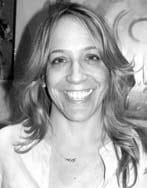
Fourteen years ago, Skulski, the 38-year-old chairperson of Santa Monica’s Commission on Women, loaded up a U-Haul truck and made her way across the country.
During her two and a half years on the commission, Skulski has overseen a number of projects including the Report on Women and Girls in Santa Monica, which gives a comprehensive look into the status of the city’s female population.
But Skulski’s community service isn’t limited to women’s issues. Throughout her life, she’s always tried to reach out to others, especially those less fortunate than herself.
“I remember when I was little, and I would throw a dollar bill out the window because the car that was driving wouldn’t stop... And in my stubborn nature, I’d roll down the window and throw a dollar bill or two out the window,” she said.
Things haven’t changed much. Since moving to LA, single and never married, Skulski keeps herself busy in a myriad of charitable organizations and events. Skulski founded Art Peace, a seven-month project which taught children of homeless families about dance, art, music and theater at an LA family housing unit in Boyle Heights.
Skulski currently volunteers with the Village of Childhelp West and the Elizabeth Glaser Pediatric AIDS Foundation. She also is part of a team trying to put together an LA area women’s center. The plan is still in the works, and they already have feminist Gloria Steinem’s endorsement.
Skulski attended Canisius College where she received a bachelor of science degree in marketing. Skulski headed west, originally intending to begin a master’s program for administration in the arts. She is currently studying business and human resources management at UCLA’s extension school.
Since moving to LA, Skulski has worked in human resources at a number of firms. Currently she works at Reed Business Information as a human resources administrator.
When she isn’t at work or serving the community, Skulski enjoys oil painting, drawing, horseback riding and roller blading. She considers herself an LA restaurant expert, claiming that she can recommend dining for any occasion — down to what dish should be ordered. Skulski recently shared her thoughts and insight with the Daily Press on her lunch break in downtown LA.
What attracts you to women’s issues? “I think it’s just being with that struggle, and knowing that I’m just sort of like a Teflon pan, in a lot of situations... My whole childhood, I stuck up for people against bullies, people that were handicapped or retarded in school, or someone that a bully was picking on.”
What’s your least favorite thing about working on the commission?
“I’d say cooperation in a non-partisan way.”
What’s your favorite part? “People are just so cute. You know, they’re just so sweet and cute and ultimately mean well and you know whether they’re beaming about something or struggling with something. I think it’s just great that there’s other people around to help them. I like to be a part of that.”
How did you get involved with the women’s commission?
“A friend of mine that I hadn’t seen in a couple years remembered how active I was — always involved in the world news, local news, and that kind of stuff... she thought I should volunteer for the commission... and I said ‘only if they need me. I’m not going to just volunteer anywhere. I have to make sure that the commission really needs someone like me because I’m someone that’s very active, and I don’t like to sit around a big room and not generate some activity or results.
“And so I went to one of the meetings of the women’s commission and through some of the dialogue that was going on, I realized that I could be at least a little helpful, and could contribute... They interviewed me, I was chosen, I was sworn in with three other people in November of 2002, and then in 2002 I immediately started a few projects which I thought were interesting, and the next September I became vice-chair.
“And the projects I was on — and actually still am on — would be the report on the status of women that came out, which was just accepted by the City Council in December, 2004. But we’re still working on the next step and then the other one was the work-life survey, which was just trying to come up with the results.”
Describe what the work-life survey is. “It’s to find out the best places for women to work in Santa Monica — like the best balance between work and life and your business world, your professional world and how you balance that with your personal life. And we wanted to find out who offered maternity leave and vacation days. We have all the results, but now we’re figuring out the summarizing part of it. And we’ll probably release it sometime hopefully in April.”
What prompted you to get involved on the commission?
“There’s so many things. Besides the fact that I think there was a mutual need... and the sort of niche they had at the time that needed to be filled. I tend to get people to do things that they normally would-n’t do but I make it sound exciting or interesting. And I don’t know if any of it was really lacking in the community, because there are a lot of women that are involved in the community but I wasn’t aware of it at the time... And I think that there’s a huge talent pool in Santa Monica of extremely buoyant, talented women but the community hasn’t entirely tapped into it. And if we can get some more of those people, it would only better the community if they became more involved.”
Are you working on any other projects? “I’ve done just general projects I’ve helped on. One of the commissioners put together a screening of ‘Iron Jawed Angels,’ you know the movie with Hilary Swank that was on HBO. It was about the suffragettes, and women’s right to vote and in combination with the election, we put it on in September. And the League of Women Voters was there. We try to get people to vote. It was at SMC and we had two speakers. We had Susan Esteridge, who is a USC law professor. She was the campaign manager for Michael Dukakis. And I’m almost certain that she’s the first female political campaign manager for a (presidential candidate).
“And then, Midge Costanza who was the political campaign advisor for Jimmy Carter. So they spoke about the importance of voting, especially women voting, girls voting. But I guess they’d be a woman by the time they were old enough to vote.”
Have you worked for other women’s organizations?
“Well, I did some volunteering for NCJW, National Council of Jewish Women. I’m not Jewish. It was one of the groups that I knew about that specifically did things for women locally. It was right around the corner from where I lived in LA.”
What other causes have you worked for?
“I did so many — AIDS walks, Hands Across America, a hike for women’s breast cancer, and that was really embarrassing because there was a bald woman there — and it was around the time that Sinead O’Connor was really popular and I didn’t realize that this woman had cancer. She was walking along side of us but I didn’t say anything to her. It was sort of my own internal, ‘whoa, she has so much energy, my age walking along beside me, very upbeat and kind and all those wonderful things’ and then she told me she had cancer.”
Why do you volunteer so much? “Besides being in my nature — or anyone’s nature — I think there’s people that will do it more than other people’s disposition... I think a lot of it is my father. He’s pretty much a philanthropist. He’s a blue-collar philanthropist. He does so many things. He lives in Buffalo, and he’s really into veterans, like war veterans, even though he wasn’t in the war. He does a lot of charity work, one of them being that he loves playing billiards, and he has pool tournaments, where up to 200 people in the general area — people from like Pennsylvania, to Michigan, all the way down to North Carolina show up to play and all the proceeds go to the cause. I think he started with the veterans, but I mean he’s hit a lot of them like children’s hospitals. “... Right now I’m trying to put together a group of people doing a triathlon which will be the first time for the company I work for and it’s for the Pediatric AIDS Foundation and it’s called the Entertainment Industry Challenge. We just started like literally two weeks ago pulling people together, figuring out how we’re going to volunteer for it. We have a cycling coach that’s already signed up. We have a swim coach, and we just need a running coach. So that’ll be fun. About 15 people decided to do it so far in our company at this location. We only sent out one announcement so it feels like it could at least double.”
What surprised you most about the report on the status of women?
“Well, I remember the first thing that I always flip back to whenever I look at it, was these students that are female, the majority of them take A.P. English way more than they take advanced math or science. And it’s just this huge huge difference in how many of these girls or women take that versus math or science... We don’t know if it’s something that they’re taught by society when they’re younger like, ‘Eeew, math and science is just for boys‚’ or maybe something through the school system, maybe they’re encouraged by their teachers, getting more pats on their back for English and grammar versus how well they know a formula. So we don’t know, which is interesting because in this one class at UCLA, there was this... psychology test that someone could take and the majority... there are different things like you could be thinkers or feelers, and the majority of the class was female — like 90 percent — yet the majority were thinkers and somewhere in the back of my head I was thinking, ‘well maybe they’re taking English because they want to emote what they feel to people... So I asked the teacher, ‘so is this normal? Has this always been the case, or was it different 20 years ago?’ Her answer was, ‘Oh yeah, 20 years ago you’d have more men that were the thinkers and women that are more, you know, emotion.’ And I said, ‘well, what do you think is going to happen in the future?’ And she said ‘Right now if you look at youth or teenagers, something like that, they would be equal, about equal, the thinkers and feelers (among men and women.)’”
What’s it been like working with the City Council?
“Oh it’s been great. They passed our report. Whenever I did anything to have or be approved, or a press release to go out, city staff is always like, ‘OK, great, go with it.’ It was never like a daunting type thing... they’ve always been very supportive. I mean, our city staff liaisons are phenomenal... so much support in certain parts of the project.”
What are your goals for the rest of your term?
“I’d really like to reach out to more women... Our next step might be housing for women... I would definitely like the communication to remain as great as it was, and be forward moving with the City Council and forward moving with the city, and all the non-profits and other boards and commissions we have to work with in order to sort of diagnose and implement, and areas that are lacking in services or support. And also women that come to us at our meetings and say, ‘Hey, you know I’m a homeless woman. This is what’s going on.’”
Do you get that very often? “We do. We had someone that we helped that mentioned some things about a shelter but the city was already on it was great and helped tremendously.”
What’s your biggest accomplishment on the commission?
“Right now it’s the report. That was a big, big deal. And in a lot of ways, for our commission, I think it may be a bigger deal than we realize at this point.”
What are women in Santa Monica like as a whole?
“As I remember, the majority of the age was in their 30s, from the census data. I believe the majority was white. I don’t remember it being a huge difference, male-female, educated, from what I remember, most of them have bachelors and some have masters and some have Ph.Ds. I think the majority of the people in Santa Monica that have a masters degree, the majority are women, but when you go on to the Ph.D. level, the majority of men have Ph.Ds.”
Would you ever run for City Council? “Yeah, absolutely.”
What’s the biggest challenge for women in Santa Monica?
“Out of anything? Economics, having more money. That was another thing, after a certain salary range it is just unbelievable men make so much more than some women. We don’t know if it’s some movie star that happened to fill out the census that skewed everything, but yeah, definitely. I don’t know if it’s choice of profession or if that profession hasn’t sort of made it in society to be that more respected to actually make more money.”
Originally published in the Santa Monica Daily Press print edition on April 4, 2005. Read the original PDF.