

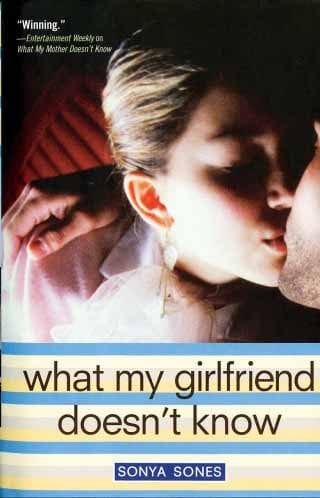
By By Dane Roberts Wans On Bookreview
Acceptance among peers is very important. A healthy self image helps. But you are 15 and it seems everyone picks on you. On top of that, you feel everyone thinks of you as a jerk.
The characters in this story are believable. The main character, Robin Murphy, is at the ripe age of 15 and he perceives himself as an outcast among the students at his high school. On top of this, he has become the boyfriend of Sophie, a popular co-ed.
The world in which Robin and Sophie live is very credible. We have all lived though a period such as this.
As the story begins, it is just after the winter break. Sophie is approaching Robins’ table in the cafeteria. Her friends are watching. She is willing to associate with Robin even if it means she also will be painted with the same brush. She is willing to lose her reputation knowing that being seen with Robin will make her an outcast.
He obviously has a poor self image because of the ridicule he is forced to endure. “What girl in her right mind would want to be seen hanging with me? With Murphy, for chrissake, the ugliest guy at Cambridge High? The guy whose last name people use as a diss. As in: “You are a real Murphy,” thinks Robin during one of the more poignant passages in the work.
The conflict is with his perception of his identity and his struggle to find himself. It is an internal struggle.
His method of self discovery comes to the forefront while he’s in his art class. He is so good that his teacher allows him to audit an art class at Harvard. But this creates the problem.
As he heads to this vaunted institution of higher learning the students there don’t know him as Murphy, the jerk, but as Robin, the art student. His self image starts to change. Here he experiences being accepted for what feels like the first time. A student there, Tessa, starts taking an interest in him as more than a friend. This forces Robin to take a hard look at his unlikely relationship with Sophie.
As he shifts his dependence for his self image from Sophie to the new group, he starts to lose touch with his high school identity and, in time, with Sophie. He allows his poor self image to cause him to abruptly break off his association with Sophie. He loses his stability and over the summer must find himself again.
We have met these characters before. This can be seen as volume two of the story. Volume one was seen through Sophies’ eyes. The present volume takes over where that book ended and is told from Robins’ viewpoint. It is not necessary to have read the first book in the series to understand this one, but it will help.
This story is told in first person. The chapters are short and the paragraphs scan as free verse.
I would recommend this book for young teens struggling with their image. It has a positive message.
The author, Sones, who lives here in Santa Monica, has also written other young adult books. Her works have received the Christopher Award, the Myra Cohen Livingston Award for poetry, and the Claudia Lewis Poetry award.
Originally published in the Santa Monica Daily Press print edition on October 6, 2007. Read the original PDF.